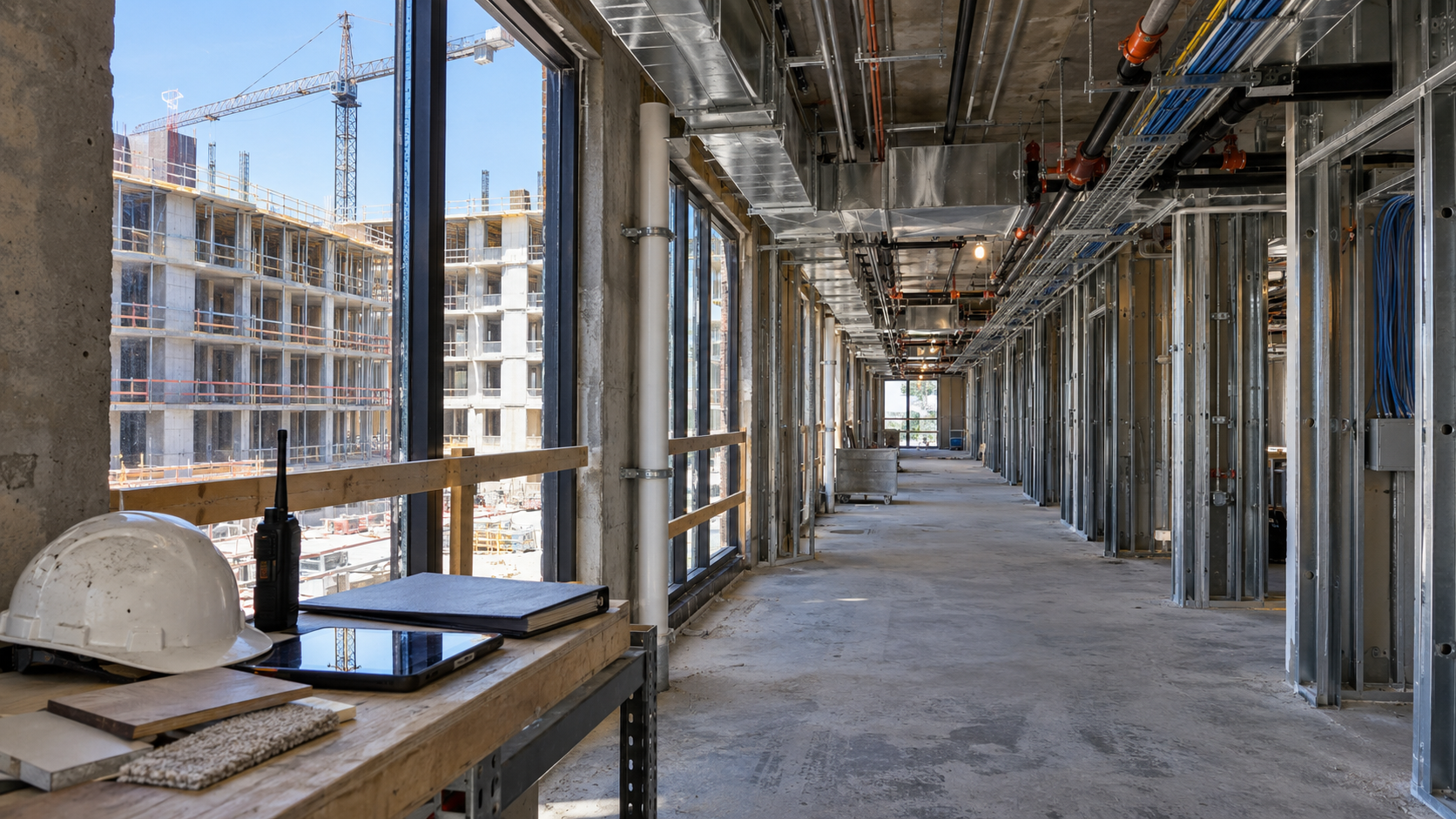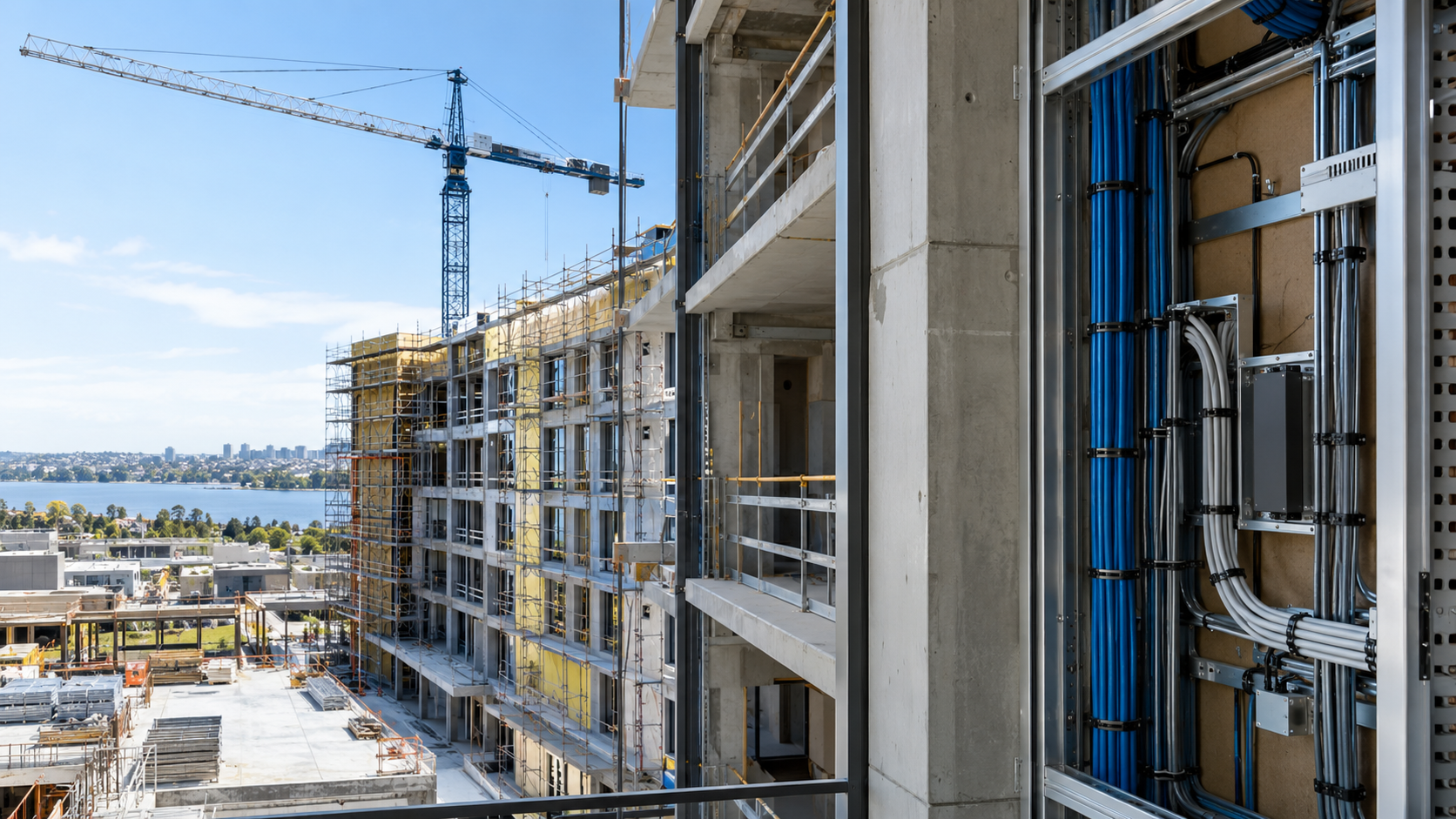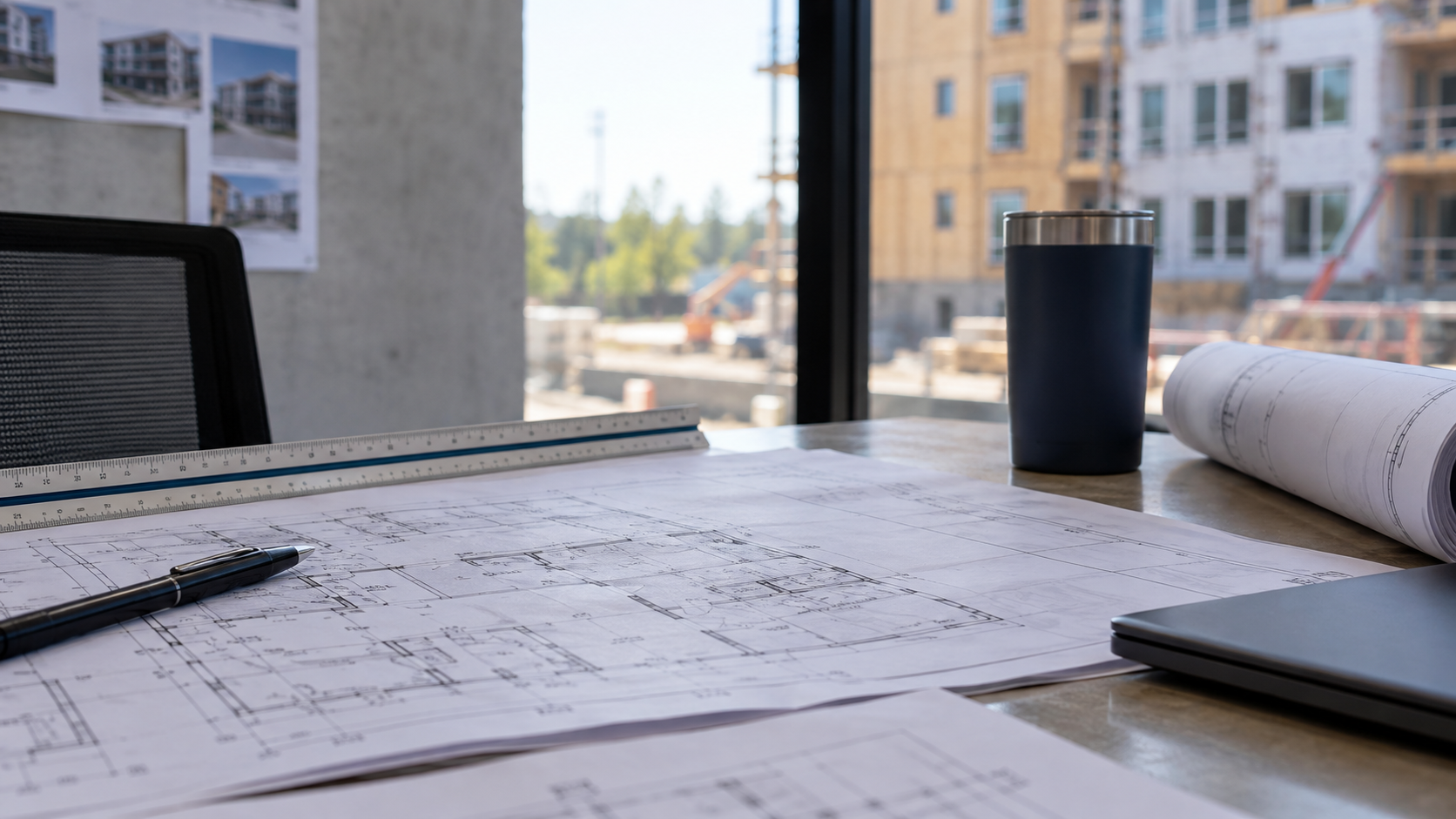

Every development project is ultimately judged by the value it creates over time. Some investments produce an immediate and visible return, while others contribute more gradually by reducing operating complexity, preserving flexibility, lowering future capital requirements, and extending the useful life of the asset. Communications infrastructure increasingly belongs in that second category. Its value is no longer limited to the delivery of internet service; it now supports property operations, resident experience, building systems, and the ability of the asset to adapt as technology changes.
Historically, connectivity was often treated as a project expense to be managed efficiently and resolved before occupancy. Once residents could receive reliable telephone, television, or internet service, the requirement was largely considered satisfied. That approach reflected the role communications infrastructure played at the time. The network supported a limited number of functions, and most property operations remained independent of it.
Today, the financial implications are broader. Leasing teams depend on digital platforms to market units, process applications, communicate with prospects, and execute leases. Property managers oversee increasingly complex portfolios through cloud-based systems. Maintenance teams rely on mobile devices, digital work orders, and connected tools to improve response times and service delivery. Residents expect dependable connectivity for work, education, healthcare, entertainment, financial services, and communication. Access control, surveillance, energy management, package systems, and other building technologies rely on the same underlying communications foundation.
As connectivity has become more deeply integrated into the operation of the property, the way its value is measured has also changed.
The Financial Value of Connectivity Is Often Indirect
A well-designed telecommunications room does not generate rent on its own. Spare conduit does not appear as a separate source of revenue on an operating statement, and comprehensive documentation is unlikely to influence occupancy immediately after construction. Even so, each of those decisions can affect how efficiently the property is operated, maintained, and modernized throughout its life.
Infrastructure that accommodates future technology without requiring extensive reconstruction makes capital projects easier to plan and less disruptive to execute. Accessible pathways reduce the amount of investigative work required before upgrades begin. Accurate documentation gives future owners and operators a clearer understanding of the systems they inherit. Reserve capacity creates room for growth without forcing the building to be modified every time requirements change.
The value of these decisions accumulates gradually. It appears in projects that cost less to complete, upgrades that require less disruption, and operational changes that can be made without first correcting limitations in the underlying infrastructure.
This is a familiar concept in other areas of development. Structural systems are not evaluated solely on the basis of immediate return. Mechanical spaces are designed with access for future maintenance. Electrical distribution often includes capacity for expansion. Roofs, envelopes, and life-safety systems are expected to perform reliably over long periods of ownership. In each case, the investment is justified not only by what it accomplishes on opening day, but by the future costs, constraints, and risks it helps avoid.
The Lowest Initial Cost Is Not Always the Lowest Lifetime Cost
A focus on initial construction cost can create an incomplete picture of connectivity economics. Infrastructure that appears less expensive during development may become significantly more costly if ownership later needs to open walls, trench pavement, add new pathways, relocate equipment, or reconstruct portions of the network to support a new requirement.
This is especially relevant in multifamily because the building and the technology inside it operate on very different timelines.
A property may remain in service for fifty years or longer, while the network electronics installed during original construction may be replaced several times. Software platforms will evolve. Wireless standards will advance. Resident expectations will continue to increase. New operational technologies will emerge that were not part of the original development plan.
The permanent infrastructure supporting those systems should be capable of accommodating that change without requiring the building itself to be repeatedly reconstructed.
Pathways, telecommunications spaces, electrical support, documentation, and reserve capacity all influence how much flexibility future owners retain. When those elements are planned thoughtfully, ownership has more options when market conditions, operating strategies, or technology requirements change. In financial terms, that optionality has value because it reduces the capital intensity associated with future modernization.
The precise return may not always be visible at the moment the infrastructure is installed, but the economic effect becomes clearer over the life of the asset.
Connectivity Has Become an Asset Management Consideration
The business case extends beyond future retrofit costs. Connectivity now influences the way the property is operated, experienced, and positioned in the market.
Residents increasingly view reliable connectivity as a baseline expectation of professionally managed housing. Strong service may not always command an obvious rent premium, but poor connectivity can quickly become a resident-experience issue, particularly as more aspects of daily life depend on reliable digital access.
The operational side of the property is becoming equally dependent on the network. Access control, surveillance, smart-building technology, energy management, resident communication platforms, and other systems increasingly rely on communications infrastructure that must support more than one function at a time.
For owners, this creates a broader question than whether the property has adequate internet service. The more important issue is whether the infrastructure gives ownership enough flexibility to deploy new technology, change providers, introduce new systems, and modernize the asset without unnecessary construction or disruption.
That distinction becomes even more important at the portfolio level. Two properties may require the same technology upgrade but present very different financial realities depending on what was built into each asset years earlier. One may be able to support the change within existing pathways and telecommunications spaces, while the other may require extensive retrofit work before the same technology can be deployed.
Avoided Cost Is Part of the Return
One of the more difficult aspects of valuing communications infrastructure is that many of its benefits appear as costs that never occur.
A properly sized telecommunications room continues to create value each time equipment is replaced or expanded. Spare conduit installed during construction may remain unused for years before eliminating the need for a future trenching or reconstruction project. Accurate turnover documentation can reduce the time and expense required to understand existing conditions during a renovation, acquisition, or provider transition.
These advantages do not necessarily show up as new revenue, but they affect the financial performance of the property nonetheless.
Buildings that require fewer corrective projects are easier to operate. Capital improvements become more predictable when ownership understands what infrastructure exists and where capacity remains available. Technology upgrades become less disruptive when pathways and spaces were designed with change in mind. Portfolio initiatives become easier to execute when properties do not require extensive infrastructure remediation before new systems can be introduced.
Connectivity Is Part of the Long-Term Capital Strategy
The broader business case for connectivity is therefore less about treating the network as a standalone technology investment and more about recognizing its role within the permanent capital structure of the building.
Like other foundational systems, communications infrastructure influences how efficiently the asset can operate, how easily it can be modernized, and how much flexibility ownership retains as requirements change. The technology occupying that infrastructure will evolve repeatedly, but the quality of the underlying framework will continue affecting the property long after the first generation of equipment has been replaced.
For developers, this means evaluating connectivity decisions beyond the immediate cost of construction. For owners, it means understanding how those decisions influence future CapEx, operational flexibility, modernization, and portfolio strategy.
The objective is not to build infrastructure that never changes. It is to create a property capable of changing without requiring its permanent fabric to be rebuilt around every new generation of technology.
Viewed through that lens, connectivity becomes more than a utility expense or technical requirement. It becomes part of the long-term strategy for protecting the adaptability and financial performance of the asset.