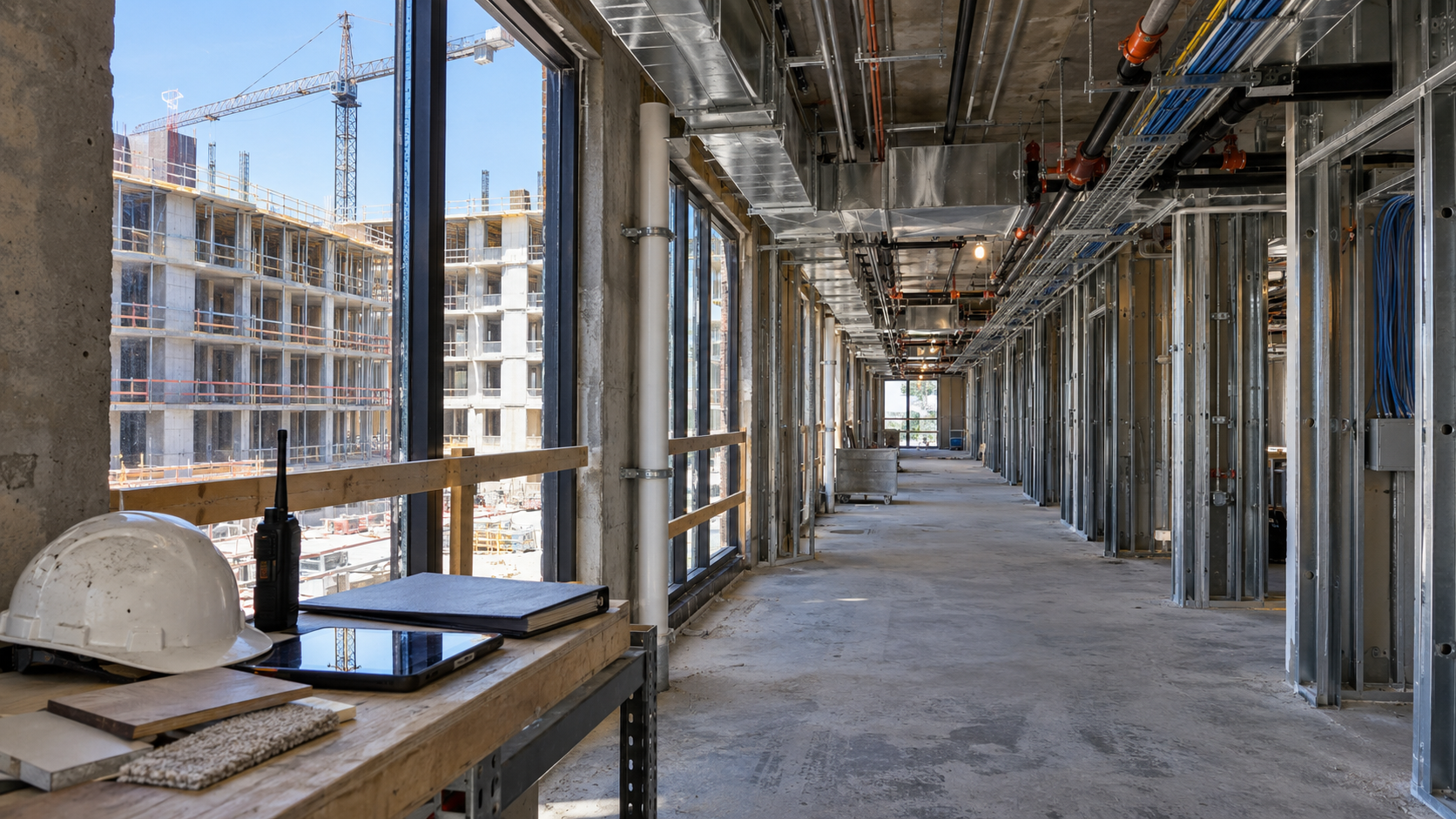
Every major building system eventually transitions from construction to operations. Mechanical systems are handed over to facilities teams. Life safety systems become part of routine inspections and maintenance. Elevators move from commissioning to ongoing service contracts. Multifamily connectivity infrastructure should be viewed through the same lens.
Once the property begins operating, the questions change dramatically. Instead of asking whether the system was installed correctly, ownership begins asking whether it is easy to manage, whether residents receive a consistent experience, whether future upgrades are straightforward, and whether the infrastructure will continue supporting the property’s operational goals.
A successful turnover should prepare ownership to answer those questions with confidence. That requires far more than simply delivering a functioning network.
Residents Should Never Experience the Construction Process
The first real test of a completed network occurs with the property’s newest resident.
Move-in should be simple. Residents should be able to activate service quickly, understand what is available to them, and begin using the network without waiting for technicians, coordinating installation appointments, or troubleshooting infrastructure that should have been completed months earlier. Every unnecessary step introduces friction into what should be one of the property’s best first impressions.
This outcome is not created at move-in. It is created during design, commissioning, and turnover. The quality of documentation, the completeness of testing, the service model selected by ownership, and the readiness of operational teams all determine whether residents experience a seamless activation or an avoidable support issue.
When connectivity is treated as an operational system rather than a construction deliverable, resident onboarding becomes significantly more consistent and predictable.
The Network Should Be Ready for Tomorrow, Not Just Today
Technology will continue changing long after construction is complete. Internet speeds will increase. Resident expectations will evolve. Building systems will become more connected. New operational platforms will emerge that have not yet been imagined during the design process.
The network should be prepared for that reality.
One of the most important questions ownership can ask before accepting a completed project is whether future improvements can be implemented without rebuilding infrastructure. Can resident speeds increase through equipment upgrades, or will additional fiber need to be installed? Can new property technologies be connected using existing pathways, or will new construction be required? Can operational systems expand as the community grows, or has every pathway already reached capacity?
Infrastructure that supports future growth protects ownership from unnecessary capital expenditures. Infrastructure designed only for today’s requirements often becomes tomorrow’s renovation project.
Documentation Is Part of the Deliverable
Many turnover packages focus heavily on warranties, equipment inventories, and closeout documents. Those materials are important, but they represent only part of what ownership needs to successfully operate a network over the long term.
Complete documentation should explain how the system is designed, where critical infrastructure is located, how fiber is routed throughout the property, what equipment has been installed, and which organizations are responsible for ongoing support. Labeling should be complete and consistent. Test results should demonstrate that the infrastructure performs as designed rather than simply confirming that equipment powers on.
Years after construction, this documentation often becomes one of the owner’s most valuable operational resources. It supports maintenance, simplifies troubleshooting, accelerates renovations, and reduces dependence on institutional knowledge that may disappear as personnel change.
A well-documented network is easier to operate, easier to maintain, and significantly easier to improve over time.
Ownership Should Understand More Than the Technology
A completed network also transfers operational responsibility to property management and ownership teams that may not have participated in the construction process. They should understand more than where equipment is located. They should understand how support is provided, who is responsible for different portions of the infrastructure, and what processes exist when changes are required.
Questions that seem simple during turnover often become major operational issues later. Who responds when an access point fails? Who owns the fiber between buildings? Can ownership authorize infrastructure modifications independently, or does provider approval become necessary? What happens if another service provider needs access to the property in the future?
Clear answers eliminate confusion and reduce operational delays. More importantly, they ensure that ownership remains in control of decisions affecting its own asset.
Flexibility Is One of the Most Valuable Assets Ownership Can Inherit
Perhaps the greatest measure of a successful connectivity project is not what it delivers on opening day but what it allows ownership to do five, ten, or twenty years later.
Can the property adopt new resident technologies without major reconstruction? Can operational systems expand as needs evolve? Can ownership negotiate with future providers from a position of strength? Can equipment be modernized without replacing the infrastructure behind it?
These questions all point toward one objective: preserving flexibility.
Buildings inevitably change throughout their lifecycle. Resident expectations shift. Technology advances. Business priorities evolve. Infrastructure that preserves flexibility allows ownership to respond to those changes without repeatedly investing in expensive construction projects.
Conversely, infrastructure that locks ownership into a single technology approach, service model, or provider relationship often creates unnecessary financial and operational constraints for years to come.
Think Beyond the Current Owner
Many multifamily communities will change ownership at least once during their operational life. When that happens, the quality of the connectivity infrastructure becomes part of the asset being transferred.
A future buyer should inherit more than functioning equipment. They should receive complete documentation, clearly defined infrastructure ownership, transferable agreements where appropriate, organized records, and confidence that the property’s communications infrastructure can continue supporting future business objectives.
Incomplete documentation, unclear ownership rights, or restrictive provider agreements can complicate due diligence and reduce flexibility for future ownership groups. Conversely, infrastructure that is well documented, scalable, and clearly controlled becomes another indicator of a professionally developed asset.
Like any major building system, connectivity should enhance the property’s long-term marketability rather than becoming a hidden liability discovered during acquisition.
Turnover Should Deliver an Asset, Not a Future Project
The best connectivity projects are almost invisible after construction. Residents move in without difficulty. Property teams understand how the system operates. Documentation is complete. Support responsibilities are clear. Future upgrades occur without major disruption. Years later, ownership continues benefiting from decisions made during design and construction.
That is ultimately the purpose of turnover.
A completed network should represent the beginning of decades of reliable operation rather than the beginning of a list of deferred improvements. Owners are not accepting a collection of cables, electronics, and telecommunications rooms. They are accepting infrastructure that will influence resident experience, operational efficiency, technology adoption, and capital planning throughout the life of the property.
Construction teams naturally focus on delivering a successful project. Ownership focuses on operating a successful asset. The strongest developments recognize that those are not separate goals. They are the same objective viewed from different points in the property’s lifecycle.
When turnover is approached with that perspective, connectivity becomes far more than another completed trade. It becomes infrastructure that continues creating value long after the construction trailers have left the site.