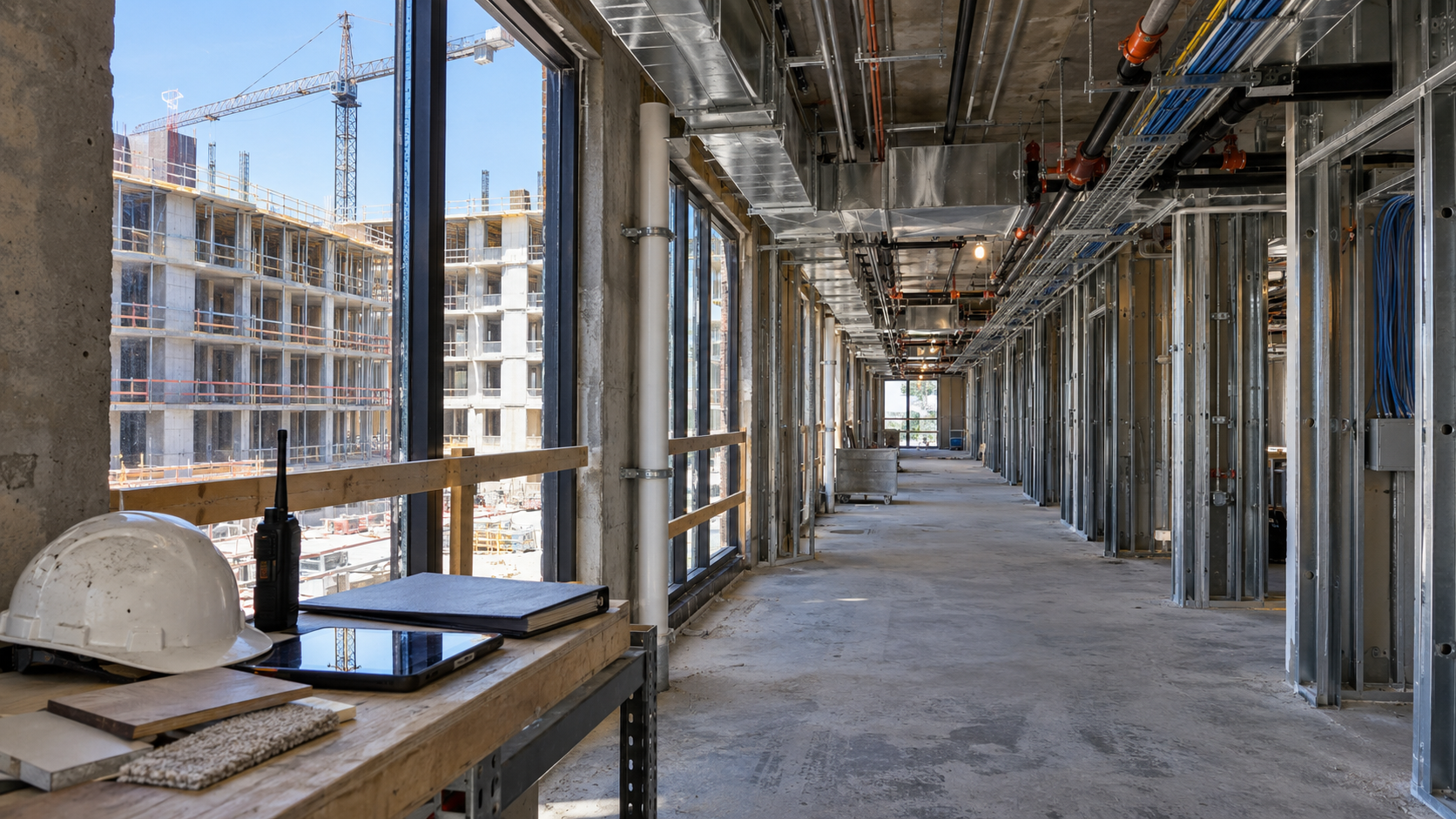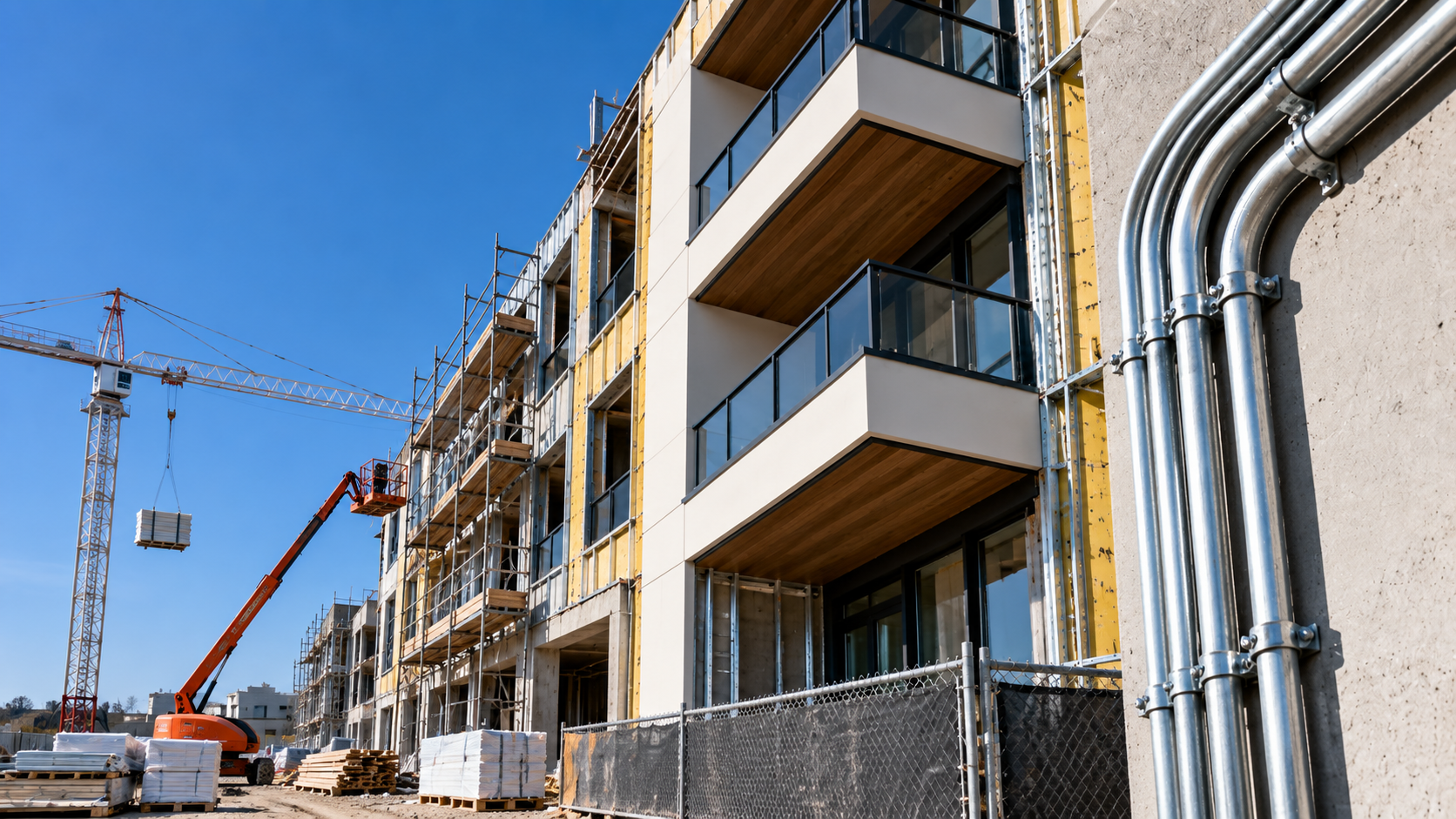

By the time a multifamily project breaks ground, hundreds of decisions have already been made about how the property will be built, operated and positioned in the market.
Multifamily connectivity planning should be one of them. But all too often, it isn’t. Internet and communications infrastructure can enter the conversation after floor plans have been established, telecom space has been allocated, pathways have been routed and major building systems are already competing for space.
At that point, the question is no longer what makes the most sense for the asset. It’s what can still fit in the plans.
The network equipment installed at opening will eventually be replaced. The conduit, fiber pathways, telecom rooms, and infrastructure choices surrounding it can remain with the property through multiple cycles, ownership changes, and capital plans.
For owners and asset managers, the goal isn’t to predict what connectivity will look like 20 years from now. It’s to make sure today’s design doesn’t make tomorrow’s options unnecessarily expensive.
These are 15 questions worth answering before the plans are finalized.
What is connectivity supposed to do for the asset?
Before the talk about fiber counts, Wi-Fi standards, or equipment even begins, start with the investment strategy.
What does ownership want from connectivity?
For one property, the priority may be supporting a premium resident experience. For another, it may be generating ancillary revenue, improving operating efficiency, supporting smart-building systems or limiting future capital requirements.
The hold period matters too.
A long-term owner may place a higher value on infrastructure control, upgrade flexibility and avoiding future retrofit work. An owner developing for an eventual sale may care more about documentation, scalability, and handing the next buyer an answer without obvious infrastructure liabilities.
The technical plan should follow the business plan, not the other way around.
What are we building to last?
Not everything in a network has the same useful life. Things like access points, switches and other basic electronic components will change.
The part that is up in the air is whether the physical infrastructure surrounding these network components will still be useful when they do.
A property’s telecom rooms, backbone pathways, fiber routes, and equipment locations are much harder to revisit after construction. Designing those elements around what is being installed on opening day can turn a routine technology refresh into a construction project years down the road.
You don’t need today’s equipment to last 20 years, you just need to design a building to be ready for what replaces it.
Who actually owns the infrastructure?
Who owns the conduit? The backbone fiber? The equipment? What can ownership continue using if the service provider changes? What documentation transfers with the property?
Those distinctions might not affect your day-to-day operations in year one, but they can become important during a refinancing, acquisition, disposition, network modernization, or provider change. Infrastructure ownership is ultimately about control. The more clearly that is defined during development, the fewer surprises ownership has to untangle later.
How much flexibility are we preserving?
No one knows exactly what a multifamily property’s technology requirements will look like a decade from now, but that doesn’t mean that you have to design blindly.
There is a meaningful difference between trying to predict future technology and simply leaving room for change.
Can more fiber be added without opening walls? Can equipment be replaced without reworking finished spaces? Is there room to expand? Could the property support a different provider or connectivity model later? Every design decision can preserve options or take them away. For future-planning, that flexibility has value.
Are the telecom rooms in the right places?
Telecom rooms are easy to treat as leftover space on building plans, but they shouldn’t be.
Their placement affects backbone distances, pathway routing, equipment accessibility, maintenance and future expansion. A room that is inconvenient on a set of drawings can remain inconvenient for the entire life of the asset.
The best time to work through those tradeoffs is when mechanical, electrical, and other building systems are being coordinated, not after every desirable square foot has already been spoken for.
A few feet on a floor plan can have a very long operational life.
Are the pathways sized for the property we’re building today, or the property we’ll own tomorrow?
Conduit and pathways are not exciting line items. They are also some of the least convenient infrastructure to change after the building is finished. During development, it’s tempting to ask whether the planned network fits. A better question is whether the updates down the road will fit, too.
Properties tend to add connected devices, applications, and systems over time, not remove them. Additional pathway capacity is relatively simple to accommodate while walls are open and construction is underway.
Creating that capacity later is a very different proposition.
When the technology changes, how will the new technology get where it needs to go?
Eventually, components in your current network will need to be upgraded. The important question for owners is whether that upgrade can happen primarily in the telecom room or whether it requires work throughout the building.
Future technology may need to reach units, amenity spaces, common areas, building systems, and operational equipment. If there is no practical path to those locations, even straightforward upgrades can become disruptive.
A well-planned property separates technology changes from unnecessary construction.
That is a much more useful definition of future-eady than trying to guess which piece of hardware will be popular ten years from now.
Is this a resident internet network, or is it part of the building’s operating infrastructure?
Resident connectivity gets most of the attention because it is the part that has the most outward visibility on the property, but it’s no longer the only part that matters.
Access control, cameras, package systems, leasing operations, maintenance tools, audiovisual systems, and smart-building technologies increasingly depend on reliable connectivity as well.
For owners, this changes the role of the network. It’s not simply an amenity delivered to residents. It’s becoming part of the operating infrastructure of the property.
That means network planning should account for what the building itself will need, not only what is used by residents.
Who owns each piece of the project?
One of the most expensive phrases in new construction is some version of, “We thought someone else had that.”
Connectivity crosses several scopes at once. The architect may have responsibility for space planning. The electrical contractor may own portions of the pathway. A low-voltage contractor may install cabling. A service provider may supply equipment. Another party may be responsible for testing, labeling, or commissioning.
Without clearly assigned responsibilities, gaps tend to show up late. Before construction, there should be an answer for who owns pathways, installation, documentation, testing, commissioning, labeling, and final turnover.
Clarity in this context isn’t bureaucracy, it’s change-order prevention.
What will ownership receive at turnover?
Years after a development team has moved on, somebody down the line will need to understand what was built. They shouldn’t have to reverse engineer it. Owners should receive useful documentation of fiber routes, pathway layouts, testing records, labeling conventions, equipment inventories, and other information needed to operate and modify the infrastructure.
The thing about good documentation is that it rarely feels urgent at opening. Its value tends to show up later, when a new property team, contractor, buyer, or service provider needs to understand the property quickly.
This should be institutional knowledge that belongs with the asset.
Could ownership change providers without fighting the building?
Providers change. Contracts expire. Business models evolve. Ownership strategies change. The building itself should not make those decisions harder than they need to be. That doesn’t mean every property has to accommodate every imaginable provider or network architecture. It does mean owners should understand whether current infrastructure decisions are creating unnecessary dependencies.
A property with usable pathways, clear infrastructure ownership, and room for change enters future provider conversations from a very different position than one built around a single service arrangement.
Building this kind of optionality into your design plans can become negotiating leverage down the road.
Are sustainability goals considering future renovation, too?
Sustainable design is usually discussed in terms of what goes into the building today. There is another side to it: what will have to be torn apart later. Infrastructure that can accommodate new technologies without repeatedly opening walls, adding new pathways or replacing usable physical systems can reduce future construction waste and extend the useful life of what has already been installed.
Adaptability is not the most visible sustainability feature in a new development, but over the life of a property it can be a meaningful one.
Where have we left room to grow?
A design that completely accommodates today’s requirements may be more constrained than it appears. Connectivity demand rarely moves in the other direction. That growth can affect fiber capacity, pathways, telecom room space, electrical requirements, and cable management.
Owners don’t need unlimited capacity. They do need to know where the property has room to grow and where it does not. The difference is much cheaper to establish during the design process than it is to discover after occupancy.
Could a future buyer understand this infrastructure?
When looking at connectivity, it’s helpful to look at it through the eyes of the next owner, even when there’s no plan to sell. Could a buyer determine what infrastructure exists, where it runs, who owns it, and what condition it is in? Could they understand how easily the network could be upgraded?
Well-labeled equipment, logical layouts, complete documentation, and clear ownership make those questions easier to answer. Well-documented assets are easier to understand. Will the decisions you make still look smart in 20 years?
This may be the most useful test of all. Imagine the property two decades after opening.
The original network equipment is gone. Resident expectations have changed over time. New building tech has been added The property may have gone through multiple operators, capital plans, or owners.
What remains from the decisions you’re making today?
If the answer is useful pathways, accessible telecom spaces, clear documentation, adequate capacity, and the flexibility to keep changing, the infrastructure has done its job.
If the building has to be reconstructed every time the technology changes, it hasn’t.
Connectivity planning is asset planning
The most important connectivity decisions in a multifamily development often aren’t decisions about internet service, they’re decisions about the building. Where infrastructure runs. Who owns it. How much capacity exists. Whether it can change. What the next owner inherits. Those decisions are easiest to make early, when they’re still lines on a drawing instead of finished construction.
The technology will change, that’s a given. The better question for owners is whether the asset will be ready when it does.