
There was a time when central air conditioning, elevators, modern electrical systems, and structured life-safety infrastructure were considered distinguishing features rather than baseline expectations. As multifamily design evolved, those systems became fundamental parts of the building itself. Connectivity is now following a similar path, moving from a service that was layered onto the property to infrastructure that increasingly shapes how the building operates.
For years, internet service in multifamily was treated as a utility with a relatively simple objective: bring service to the property and make sure residents could get online. That approach made sense when relatively few building functions depended on communications infrastructure and technology played a much smaller role in day-to-day operations. The network had an important job, but it was not yet supporting the broader operating environment of the property.
Why Multifamily Connectivity Infrastructure Matters More Than Ever
Residents now rely on connectivity for work, education, healthcare, banking, entertainment, and communication, while property teams depend on cloud-based software, mobile workflows, digital access systems, surveillance, package management, environmental monitoring, utility management, and a growing number of connected technologies. The network supporting a multifamily property is doing far more than delivering internet to apartments. It has become part of the operating environment of the building, which changes the conversation for developers, architects, engineers, contractors, and ultimately, the owners who inherit the finished asset.
Decisions about telecommunications rooms, pathways, fiber routes, utility entrances, conduit capacity, power, and network access are no longer isolated technology decisions. They can influence which systems the property can support, how easily those systems can be upgraded, and what ownership may have to spend when the infrastructure eventually needs to change. Because that change is inevitable, the physical framework supporting connectivity deserves more attention during development than it traditionally received.
Technology Changes Faster Than the Building
A multifamily community may stand for fifty years or more, while most of the technology installed inside it will not. Network electronics will be replaced, Wi-Fi standards will advance, software platforms will change, and new building systems will emerge as others disappear. Trying to predict exactly what a property will need ten, twenty, or thirty years from now is therefore far less useful than designing infrastructure that can accommodate whatever comes next.
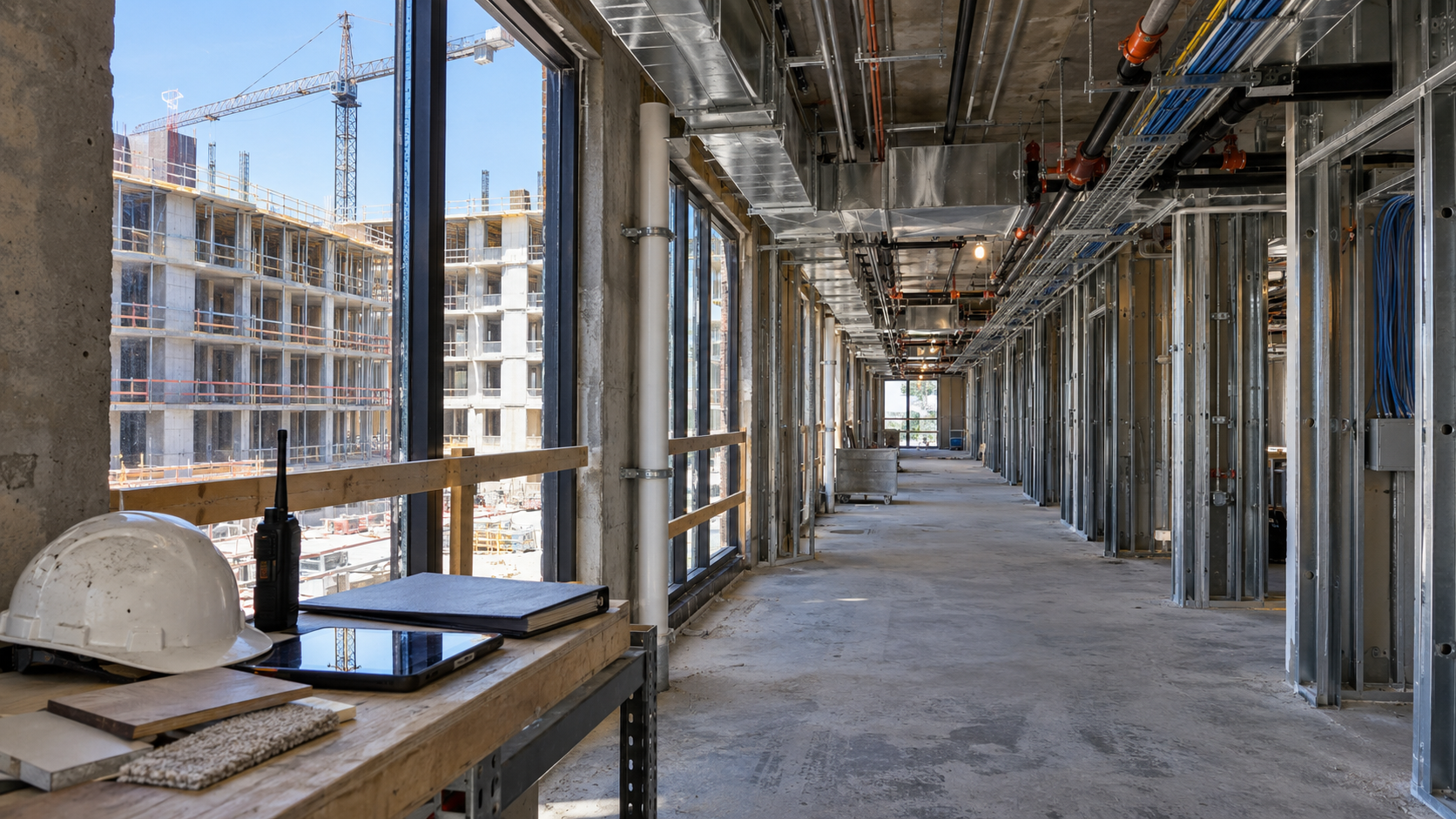
That is where good connectivity planning begins. The emphasis should be less on designing around a particular generation of technology and more on creating the physical framework that allows technology to change over time. Telecommunications rooms need enough space to remain useful, pathways need to be accessible, conduit needs enough capacity to support additions, utility entrances need to be coordinated, and documentation needs to survive turnover from development to operations and from one owner to the next.
These are not particularly visible investments, but neither are electrical rooms, plumbing chases, or mechanical spaces. Their value comes from what they make possible over the life of the building and the problems they help future owners avoid. In that sense, permanence matters more than any individual technology choice.
Small Connectivity Decisions Can Create Large Future Costs
One of the misconceptions around connectivity planning is that long-term flexibility requires a major investment during construction. In practice, some of the decisions with the greatest long-term impact are relatively small when they are made at the right point in the development process. An extra conduit installed before concrete is poured, a little more usable space in a telecom room, a reserved pathway between buildings, or accurate as-built documentation at turnover can all create options that become much more valuable later.
During development, those choices can look like minor details. Five or ten years later, they can determine whether new fiber can be pulled through an existing pathway or whether a finished building has to be opened up to create one. The difference is often less about the size of the original investment and more about when the decision was made.
That distinction is especially important during value engineering. Removing infrastructure from the project does not necessarily eliminate the future need for it; in some cases, it simply moves the cost into a later phase of the asset’s life. A relatively small construction savings can become a much larger capital project when a future owner needs to add capacity, change providers, deploy a new building system, or modernize the network.
The original development team may never see that expense, but the asset still absorbs it. This is one of the clearest reasons connectivity decisions should be evaluated over the life of the property rather than only against the opening-day budget. The long-term economics often look very different from the initial construction cost.
Connectivity Infrastructure Is an Ownership Issue
Connectivity can no longer sit exclusively within the technology conversation because the infrastructure underneath it increasingly affects broader ownership priorities. Operating expenses, future CapEx, provider flexibility, resident experience, smart-building deployments, revenue opportunities, acquisition planning, and portfolio standardization can all be influenced by the way communications infrastructure was designed. Those are not simply network considerations; they are asset-management considerations.
When a property changes hands, the new owner inherits far more than the current internet service. They inherit the pathways, cabling, telecommunications spaces, contracts, documentation, access rights, and infrastructure decisions that came with the building. If those systems were designed well, ownership has more options when it wants to upgrade, change providers, or introduce new technology.
The same principle becomes even more visible at the portfolio level. Two properties of similar age may require the same network upgrade, yet the cost and complexity of deploying it can be dramatically different depending on what was built into each asset years earlier. The technology may be identical, but the economics of deploying it are not.
For owners trying to standardize technology across multiple properties, those differences can have a meaningful impact on capital planning. A building that is ready to support change provides more flexibility than one that requires infrastructure remediation before each new system can be introduced. Over time, that flexibility becomes part of the value of the asset itself.
Build for Flexibility, Not a Specific Technology
There is no such thing as truly future-proof technology. Fiber may have a very long useful life, but the electronics attached to it will change, wireless standards will continue advancing, and new applications will place demands on networks that are not part of today’s development plans. The goal should not be to freeze a building at some imagined point of technological perfection, but to give it enough flexibility to evolve as requirements change.
That means separating the parts of the system that are expected to change frequently from the infrastructure that is difficult to replace. Electronics can be swapped, software can be updated, and access points can be upgraded with relatively little impact on the physical building. Opening walls, trenching pavement, adding risers, relocating telecom rooms, or creating new pathways in an occupied property is a very different undertaking.
The more difficult something will be to change later, the more carefully it should be considered during development. This does not require the project team to know exactly which technologies will be used decades from now. It requires enough foresight to preserve the building’s ability to accommodate change without repeatedly reconstructing its permanent infrastructure.
Good Connectivity Infrastructure Often Goes Unnoticed
One of the defining characteristics of well-planned infrastructure is that most people never notice it. Residents are not thinking about the conduit running through the building, leasing teams are not touring prospects through the MDF, and investors are unlikely to focus on spare pathway capacity during a property visit. The value tends to become visible only when something needs to change.
Owners notice when an upgrade takes months instead of weeks, when construction disrupts residents, or when a new system cannot be deployed without additional capital. They notice when the property is locked into an arrangement it no longer wants because changing it would require rebuilding infrastructure. Those are the moments when earlier development decisions become part of the operational reality of the asset.
Good connectivity infrastructure removes many of those problems from the equation. Its value appears in projects that are easier to complete, upgrades that require less reconstruction, providers that can be changed, systems that can be added, and options that remain available to ownership. Those benefits may not appear as a separate line item on a development pro forma, but they have a very real influence on the long-term operation of the property.
What Future Owners Inherit
Multifamily development has always required a long view because the people designing and constructing a community today are creating something that will pass through generations of residents, property teams, owners, technologies, and market conditions. The property may be renovated, refinanced, repositioned, sold, or incorporated into a larger portfolio, while its technology will be upgraded repeatedly. Through all of those changes, much of the permanent communications infrastructure will remain exactly where it was placed during development.
That creates a responsibility that extends well beyond getting the property open and getting residents connected. The decisions made today influence how much flexibility the next owner will have when requirements change. A building with organized telecommunications spaces, accessible pathways, sufficient capacity, thoughtful coordination, and useful documentation can continue adapting as technology evolves around it.
A building without those qualities will still need to change, but the cost and disruption associated with each change may be significantly greater. This is the larger shift taking place in multifamily connectivity. Communications infrastructure should no longer be thought of simply as technology installed inside a building, but as part of the building itself.
Once that perspective becomes the starting point, the priorities become clearer. Planning moves earlier, infrastructure is coordinated alongside other permanent building systems, and the conversation expands beyond what technology the property needs today to consider what ownership may need the building to support tomorrow. The objective is not to predict exactly what that technology will be, but to make sure the building has not been designed in a way that prevents it.