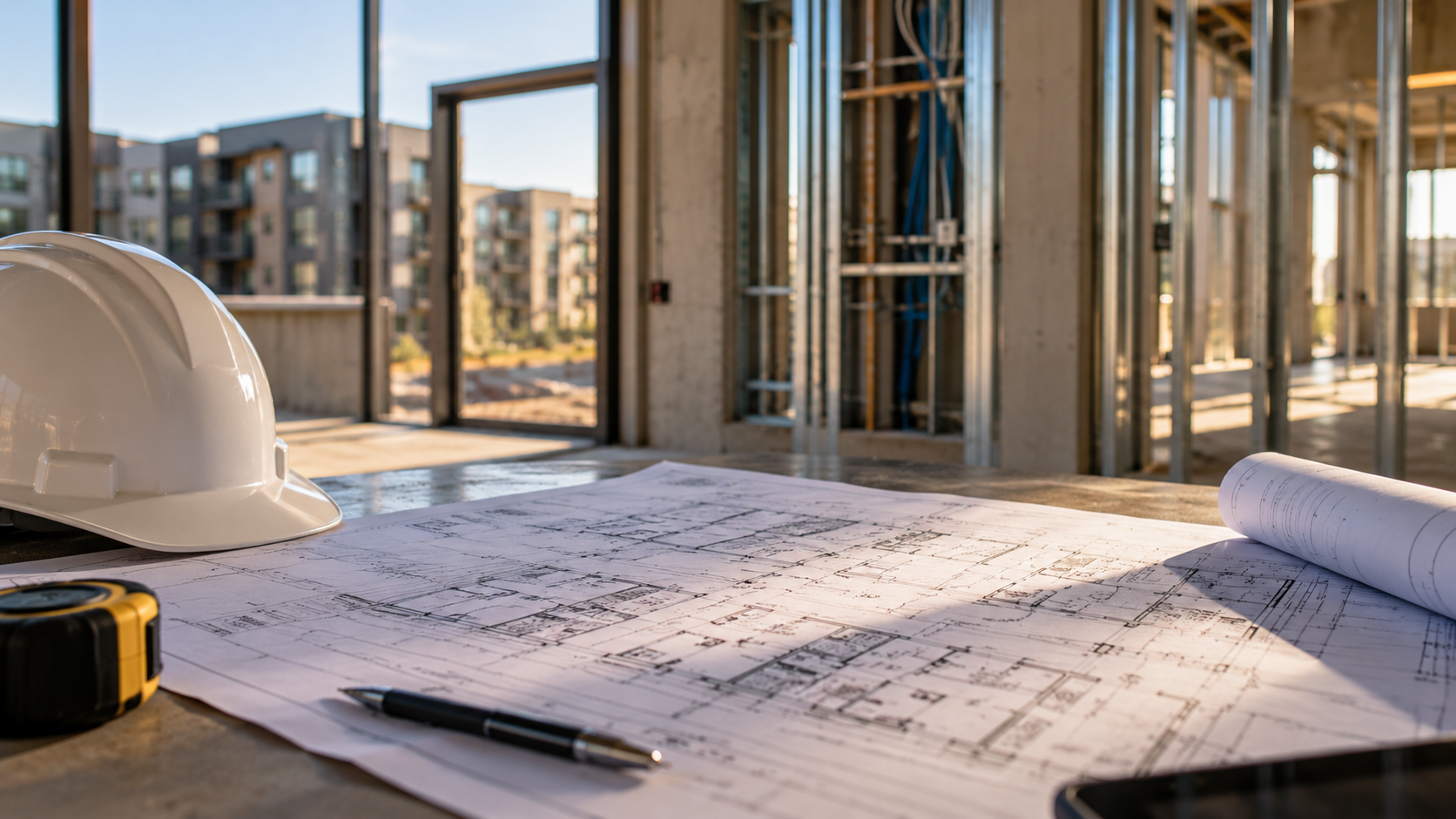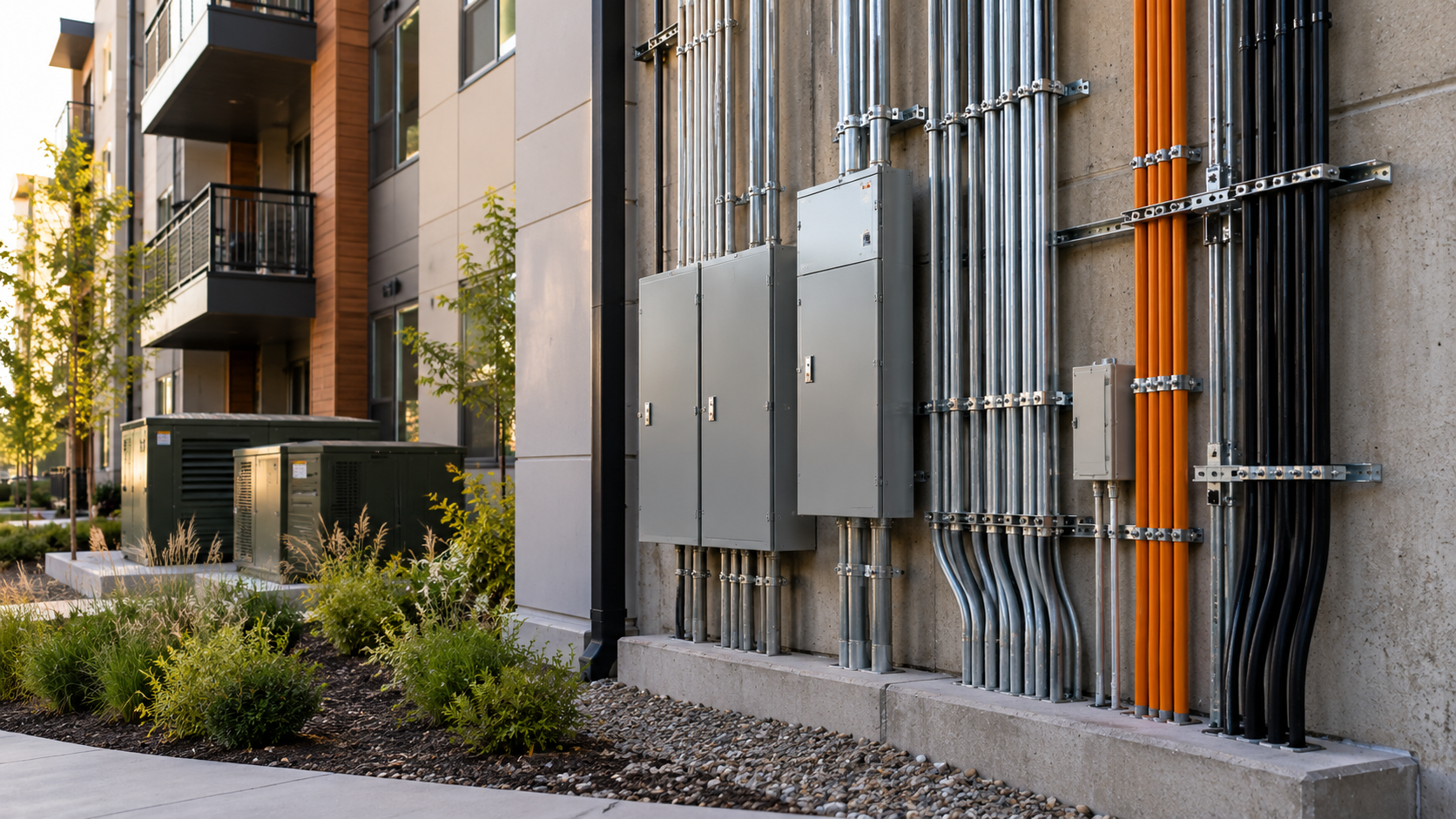

Nobody waits until a multifamily building is nearly finished to figure out where the electrical service will enter. That decision affects equipment rooms, distribution routes, available power, and work performed by several trades. It belongs in the drawings long before construction reaches the point where changes become expensive.
Connectivity doesn’t always get that same treatment.
A project can be well into design before the resident network has been fully worked out. Telecommunications rooms have been allocated, risers are taking shape, and pathways to the apartments may already be determined. The internet provider is then expected to make its equipment and service model fit whatever space is left.
That’s the practical argument for treating connectivity as the fourth utility.
Water and electricity, along with natural gas where a property uses it, are planned as essential building services. Broadband isn’t identical to those utilities in how it’s regulated, delivered, or billed. But its role in multifamily housing has changed enough that it deserves similar attention during development.
Residents depend on internet access. Property operations increasingly depend on connected systems. And the physical infrastructure delivering those connections can remain part of the building long after the original network equipment has been replaced.
Calling connectivity a utility only means something if it changes how the property is designed, operated, and maintained.
Residents Already Expect Utility-Level Service
There was a time when internet access was a relatively straightforward amenity decision. A resident contacted an available provider, scheduled an installation, and accepted whatever service that provider could deliver to the apartment.
That’s a much harder arrangement to defend when residents rely on connectivity throughout the day.
People work from home, attend classes, manage finances, use telehealth services, stream entertainment, and operate an assortment of connected devices. A household may have several people using the network simultaneously, each with different requirements.
The expectation isn’t necessarily that every apartment needs the highest speed tier available. It’s that service should be dependable, easy to activate, and capable of supporting normal daily use.
For ownership, that introduces questions beyond which provider offers the most attractive advertised speeds.
Can a resident activate service when they move in? Are the connections to individual apartments installed and documented correctly? If service fails, does the resident know whom to contact? Does the property have a clear process for escalating problems involving building-owned infrastructure?
Residents may understand that their internet provider and property manager are separate organizations. But when a connection cannot be activated because of a damaged in-wall cable or an inaccessible telecommunications closet, the property is still involved in resolving the problem.
That is where the utility comparison becomes useful. Reliable service depends on the physical installation and the operating arrangements behind it, not just the subscription a resident purchases.
The Property Depends on Connectivity, Too
Resident broadband is only part of the communications infrastructure a modern multifamily community needs.
Leasing teams use cloud-based property management platforms. Maintenance staff work through connected service systems. Access control, surveillance, package management, utility monitoring, building automation, and common-area technologies all introduce their own connectivity requirements.
Some systems share infrastructure or network services. Others need separate equipment, dedicated connections, or appropriate network segmentation for security and operational reasons. Emergency communications and life safety applications may also be subject to specific technical and code requirements that cannot simply be satisfied by placing them on the resident internet network.
The important point is that these requirements need to be considered together during building design.
Imagine a property that has already allocated every available pathway and filled its telecommunications spaces. Adding another connected building system may then involve running new cabling through finished areas, finding space for equipment, or installing a separate upstream connection.
That work may be necessary, but it is worth asking whether the underlying requirement could have been anticipated earlier.
Developers don’t have to predict every future building technology. They do need to know which systems are part of the current scope, which may be added during the expected ownership period, and how communications infrastructure will accommodate those needs.
The same planning discipline applied to electrical distribution has a place here. Building systems have different requirements, but they still need routes, space, access, power where applicable, and people responsible for maintaining them.
Utility Planning Starts Before Construction
Treating connectivity as a utility moves several decisions into the architectural and engineering process rather than leaving them entirely to the internet provider.
The first is the service entrance.
Where will communications service enter the property? Is the entrance accessible and properly coordinated with civil work and other utilities? What pathway connects it to the main network equipment? Is there a practical way to accommodate another service connection if ownership needs one later?
From there, the design needs to account for the main equipment room, backbone routes, risers, intermediate distribution locations, and connections to individual residences.
Equipment spaces require appropriate working clearances, physical access, mounting provisions, and electrical or environmental support based on what will actually be installed. Pathways need suitable capacity and routing, along with attention to installation requirements, protection, and access for future maintenance.
These details belong in coordination meetings involving architecture, electrical, civil, low-voltage design, and construction. Ownership and operations should also understand the decisions being made, since they’ll eventually inherit the infrastructure.
One particularly important question is where the fiber stops.
A building may advertise fiber internet while the optical connection ends in an intermediate telecommunications closet. Powered Ethernet switches may then distribute service over copper cabling to the apartments.
In a Fiber to the Unit (FTTU) design, fiber extends all the way to each residence. That creates a different physical infrastructure for future upgrades and equipment replacement.
FTTU can use active Ethernet or passive optical distribution. With a passive optical network, intermediate locations can use optical splitters rather than powered Ethernet switches. The head end and equipment at the residence still require power, but the distribution design changes what equipment must be maintained throughout the property.
Both approaches can deliver good internet service. They have different implications for cabling, equipment locations, power requirements, and future modernization.
A developer should know which architecture is being installed before approving the plans.
The final connection to each apartment deserves particular attention. Properly designed microduct or other serviceable pathways can make future cable replacement easier when the route remains intact and usable. A missing, obstructed, or undocumented pathway can turn a relatively straightforward cable replacement into work involving finished walls and occupied apartments.
The installation also needs to be verified and documented. A route shown on the drawings isn’t particularly useful if it was damaged during construction or cannot be identified after turnover.
These aren’t decisions a provider should be left to improvise once the building is nearly complete.
Reliability Requires More Than a Good Connection
Utility-level planning also means thinking about what happens when something fails.
A building can have fiber reaching every apartment and still experience outages caused by upstream service failures, power interruptions, equipment problems, or poor network operations.
The physical architecture matters, but it doesn’t guarantee reliability.
Developers and owners should understand the critical points in the network and who is responsible for each one.
If the main network equipment loses power, what happens to resident service? Are any property systems dependent on the same connection? Is backup power appropriate for the equipment and services involved? Who monitors failures and handles escalation?
Redundancy requires careful evaluation as well. Two entrance conduits don’t necessarily provide two independent service routes. Genuine service resilience depends on how connections, upstream facilities, equipment, and failover arrangements are designed.
Not every apartment community requires the same level of redundancy. A small garden-style property and a large mixed-use development may have very different operating needs.
What matters is making those decisions deliberately rather than discovering dependencies during an outage.
Responsibility should also be clear after the network is operational.
Some connectivity arrangements place network monitoring, repairs, equipment replacement, and resident support primarily with the provider. Others assign portions of that work to ownership or a managed network operator.
The service agreement needs to reflect those responsibilities, including outage escalation procedures, support expectations, and applicable performance commitments.
It’s difficult for a property team to manage service problems effectively when nobody has established which organization is supposed to respond.
Permanent Infrastructure Should Preserve Ownership Options
One reason developers plan utility infrastructure carefully is that changing it after construction can be disruptive.
Communications infrastructure presents the same problem.
Switches, routers, optical terminals, and access points will eventually be replaced. Fiber, conduit, microduct, risers, and telecommunications rooms may remain in use through several generations of electronics, assuming they remain suitable for the equipment and services being deployed.
That makes the original physical design important.
A building with accessible pathways, documented cable routes, appropriate equipment space, and reasonable expansion capacity may be able to accommodate future changes with less construction than one where every improvement requires new cabling through finished areas.
There are limits. Fiber isn’t guaranteed to support every future technology, and adding excessive capacity without a clear purpose can waste development dollars. The objective is a design that allows practical maintenance and foreseeable improvements without unnecessary reconstruction.
Preserving options also involves more than the physical network.
A building can have excellent fiber infrastructure and still face restrictions on how it can be used.
Who owns the cabling? Who has rights to the pathways? Can another provider access or reuse the infrastructure? What happens to installed equipment when the service agreement expires?
Those questions affect ownership’s ability to change service arrangements.
The answers may depend on contracts as much as engineering. Owning the building doesn’t automatically mean owning every network component inside it, and owning fiber doesn’t necessarily establish the right or technical ability to use it with any provider.
Documentation matters here, too. A future contractor needs to know where the cables run, which fibers serve which apartments, what equipment is installed, and which connections have been tested.
If that information leaves with the original installer, the owner may have a capable network that’s unnecessarily difficult to maintain or modify.
Utility-level planning should include what happens to the infrastructure after the first provider, first development team, and first generation of equipment are gone.
What the Fourth Utility Means for Asset Owners
The financial case for treating connectivity as a utility isn’t that every fiber installation increases property value or that every owner needs to spend more during construction.
It’s that communications infrastructure carries financial and operational obligations that deserve to be understood before they’re accepted.
A developer may have a choice between designs with different installation costs, equipment requirements, maintenance arrangements, and future upgrade options.
An owner may have a service agreement that includes equipment replacement or one that leaves those expenses with the property.
A long-term hold may justify infrastructure provisions that reduce the potential disruption of future upgrades. A property approaching disposition may place greater importance on transferable agreements, documentation, and identifying outstanding capital obligations.
Those decisions should be evaluated against the property’s actual operating plan.
Connectivity can also contribute to resident satisfaction and support building systems that improve operations. Whether those benefits translate into measurable NOI depends on the financial model, contract terms, and actual property performance.
The utility comparison doesn’t eliminate the need for that analysis. It makes a stronger case for doing it.
Water and electrical infrastructure are considered during development because their design affects how the property will operate long after construction. Communications infrastructure now supports enough of resident life and building operations to warrant a similar planning process.
That means determining where service enters, how it reaches the residences, what equipment and pathways the building needs, how failures will be handled, and what ownership will receive at turnover.
It also means making sure the contracts explain who maintains the system and what rights ownership retains as technology and providers change.
Calling connectivity the fourth utility won’t accomplish anything if those questions remain unanswered until the building is almost finished.
The designation matters when connectivity has a place in the drawings, responsibilities in the contracts, and a maintainable physical system that future teams can understand.
That’s what treating it like a building utility should look like.