
For a long time, internet service at a multifamily property was treated like a utility that lived somewhere outside the owner’s real operating strategy. Residents called a provider, scheduled an install, waited for equipment, and handled the relationship themselves. The property team stayed mostly out of it unless there was a construction issue, a service complaint, or a provider asking for access to a telecom room.
That model is getting harder to defend. Connectivity now touches leasing, renewals, resident satisfaction, property operations, smart building systems, common area amenities, and long-term asset value. The internet experience is no longer just something residents bring with them. It is part of how the property functions.
The problem is that many multifamily properties are still operating on connectivity models designed for a different era. They may have legacy coax systems, outdated big broadband bulk internet, limited provider choice, congested common area networks, poorly documented wiring, no fiber to the unit, or service agreements that made sense years ago but no longer support the way residents and buildings operate today.
Standing still may feel like the conservative option. In reality, it can be one of the more expensive decisions an owner makes.
Outdated connectivity creates visible and invisible costs
The visible costs are easy to recognize. Residents complain about slow speeds, unreliable service, missed installs, weak Wi-Fi, or poor support. Leasing teams hear the same questions during tours. Property managers spend time chasing internet issues they do not control. Owners see bad reviews that mention connectivity, even when the provider is technically responsible for the service.
The invisible costs are harder to track, but often more important. A property with weak connectivity may lose pricing power. It may struggle to support remote workers. It may need separate circuits for cameras, access control, package rooms, amenity spaces, and building systems. It may have limited ability to deploy new technology because the underlying network is not reliable enough, flexible enough, or owned in a way that gives the owner control.
That is the real issue. Outdated connectivity does not always show up as a single budget line item. It shows up as friction across the asset.
Residents judge the property by the internet experience
Residents do not separate the internet provider from the property as cleanly as owners might hope. If the service is slow, difficult to activate, or unreliable, the frustration often lands on the property. That is especially true in higher-end communities where residents expect the building to feel modern and frictionless.
The resident experience starts before move-in. If the internet process requires a phone call, a truck roll, a shipping delay, or a confusing set of equipment instructions, the property has already introduced friction into the move-in experience. That may have been acceptable years ago, but it feels outdated now.
After move-in, residents expect the connection to support work-from-home, streaming, gaming, video calls, smart TVs, printers, cameras, thermostats, speakers, and other connected devices. They also expect service to work consistently in the unit, not just near a router in one room. For many residents, internet quality is no longer a secondary amenity. It is part of whether the apartment works for their life.
When the property has an outdated connectivity model, the owner may not control the resident support process, the upgrade path, the equipment lifecycle, or the quality of the in-unit experience. That lack of control becomes a business risk.
Operations now depend on connectivity too
The resident network is only one part of the story. Modern multifamily operations increasingly depend on connected systems. Access control, cameras, package lockers, leak detection, thermostats, parking systems, gates, elevators, digital signage, leasing office systems, amenity Wi-Fi, and EV charging all need some form of reliable connectivity.
In many properties, these systems were added over time by different vendors with different network assumptions. One vendor brought a cellular modem. Another required a dedicated broadband line. Another used the office internet connection. Another asked for a static IP. Another installed equipment in a closet nobody documented. The result is a patchwork of circuits, devices, support contacts, and monthly bills.
That patchwork has a cost. It makes troubleshooting harder. It creates vendor finger-pointing. It increases the number of accounts the property has to manage. It can also create security and reliability concerns if critical building systems are sitting on unmanaged or poorly segmented networks.
A modern connectivity strategy should reduce operational complexity, not add to it. If the property’s network cannot support both residents and building operations in a structured way, the owner will keep paying for workarounds.
The old model can limit NOI
Connectivity has a direct relationship to NOI when it is structured correctly. A property-wide internet model can create recurring income, reduce redundant circuit costs, improve the resident experience, support upgrade revenue, and reduce operating friction. Even when an owner is not pursuing a full bulk internet model, better connectivity can still protect pricing power and reduce avoidable operational expense.
The opposite is also true. A legacy model may leave value on the table. If residents are all buying service individually from a third-party provider, the owner may have little participation in the economics. If common areas require separate circuits, the property may be paying for duplicative service. If building systems are fragmented across multiple providers, the operating cost may be higher than necessary.
This is where the conversation moves from technology to asset management. The question is not just whether the property has internet. The question is whether the current connectivity model is helping or hurting the business plan.
A property with strong infrastructure, clear ownership, and a modern service model can use connectivity as an asset. A property with outdated infrastructure and limited control may be absorbing cost without capturing value.
Infrastructure determines flexibility
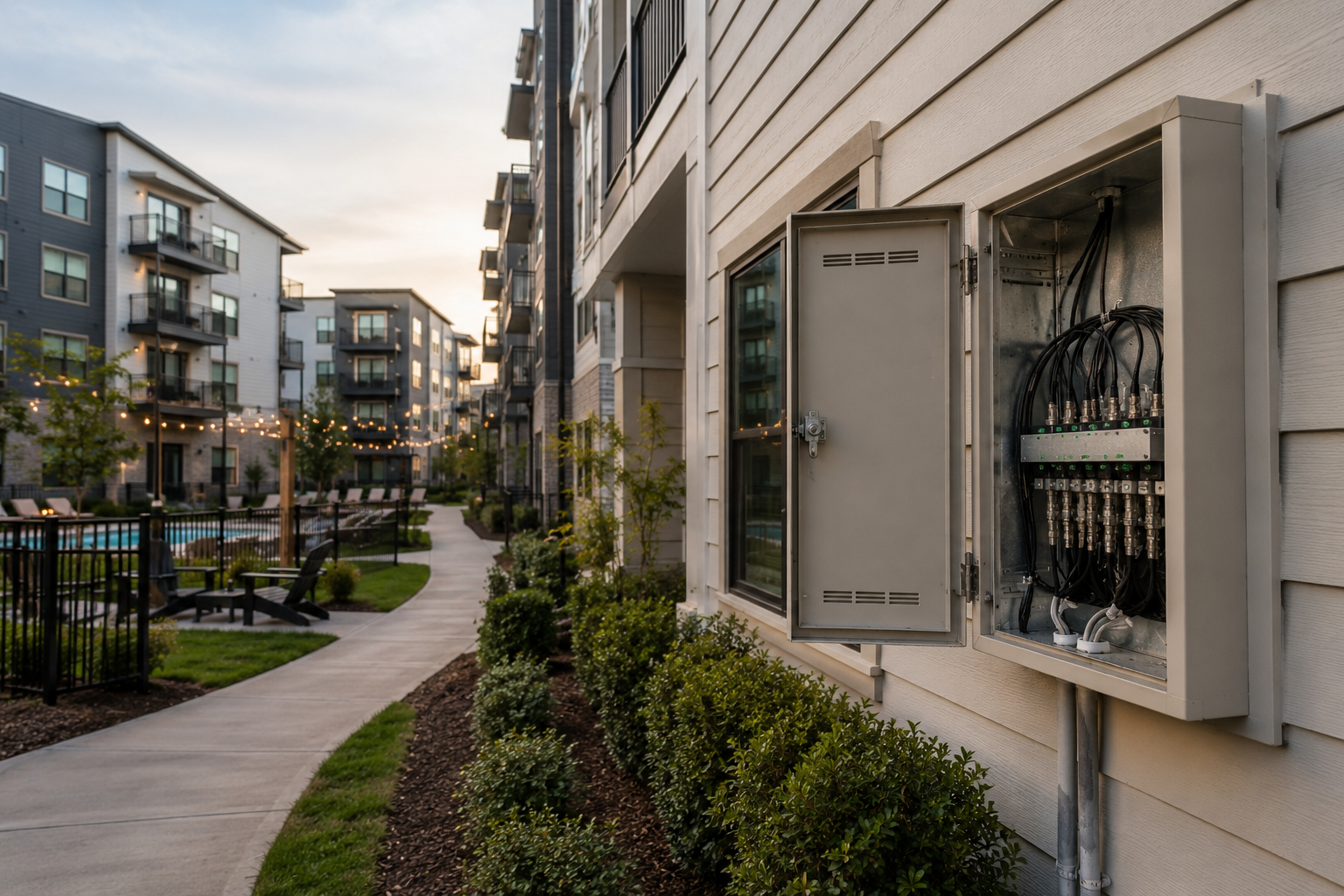
Service agreements matter, but physical infrastructure matters just as much. If the property does not have clean pathways, usable fiber, documented wiring, adequate telecom space, or spare capacity, future options become more expensive. The owner may want to change providers, add redundancy, improve common area coverage, support smart building systems, or move to fiber-to-the-unit, but the building may not be ready.
This is where standing still becomes especially costly. Every year that passes without addressing infrastructure can make the eventual upgrade more difficult. Construction costs rise. Buildings become more occupied. Telecom spaces get more crowded. Landscaping, asphalt, drywall, and finished common areas make access harder. Existing agreements may create buyout issues or access limitations.
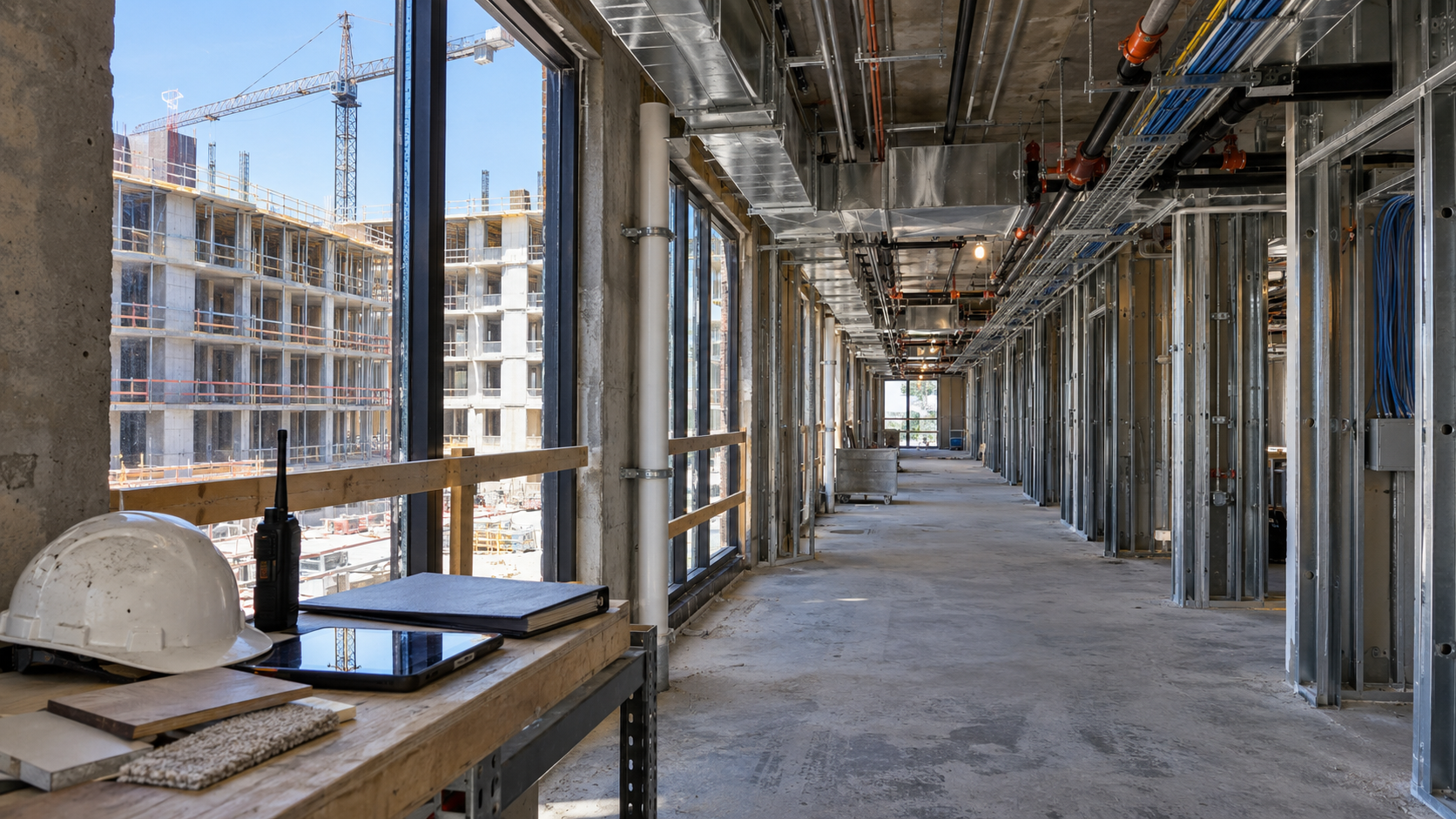
The cheapest time to build the right infrastructure is during construction. The second-best time is before a crisis forces the issue. Waiting until residents are angry, systems are failing, or a sale process exposes the problem usually leads to fewer choices and higher costs.
Technology expectations will not stay flat
A property does not need to chase every new technology trend, but it does need a connectivity strategy that can age well. Bandwidth demand will continue to increase. Multi-gig service will become more common. Wi-Fi standards will keep moving forward. Residents will keep adding connected devices. Building systems will become more network-dependent, not less.
A connectivity model built around minimum requirements today may not be competitive several years into the hold period. This is particularly important for owners signing long-term provider agreements. A seven-year or ten-year term can make sense, but only if the network has a real upgrade path and the contract does not trap the property in a static service model.
Owners should ask whether the current infrastructure can support future speeds, future equipment, future providers, and future operating needs. If the answer is unclear, that uncertainty has value implications.
Standing still can affect exit value
Connectivity is becoming part of diligence. Sophisticated buyers increasingly want to understand what infrastructure exists, who owns it, what agreements are in place, what rights have been granted, and whether the property can support modern resident and operational expectations. A property with unclear wiring ownership, outdated service agreements, limited provider flexibility, or poor documentation may create concerns during acquisition review.
That does not mean every buyer will underwrite connectivity the same way. But as internet service becomes more central to the resident experience and property operations, it is reasonable to expect more scrutiny. A buyer looking at two similar assets may view the one with better infrastructure, cleaner documentation, and more flexible provider options as the better long-term platform. Connectivity is not just an operating issue. It is part of the asset’s story.
The first step is knowing what you have
Many owners do not have a clear inventory of their connectivity infrastructure. They may not know who owns the wiring, where the main points of entry are, what pathways exist between buildings, how many circuits are active, what common area systems rely on which connections, or what provider agreements limit future decisions.
That lack of visibility is itself a risk. Before an owner can decide whether to upgrade, renegotiate, rebuild, or change models, they need to understand the current state. That review should include contracts, infrastructure, provider performance, resident experience, property operations, common area coverage, and future development plans.
The goal is not to create a technical report for the sake of documentation. The goal is to understand whether the current connectivity model supports the asset’s business plan.
The cost of doing nothing is not zero
It is easy to delay connectivity decisions because the current system is technically working. Residents have service. The property has providers. The cameras are online most of the time. The leasing office has internet. The building has not reached a crisis point.
But “working” is not the same as optimized, controlled, future-ready, or financially aligned. A property can function day to day while still carrying hidden costs that show up in resident dissatisfaction, operational complexity, lost revenue, limited flexibility, and weaker asset positioning.
Standing still has a cost. The longer owners wait to evaluate connectivity as infrastructure, the more likely they are to inherit problems that could have been addressed earlier and less expensively.
Multifamily owners do not need to become network engineers. They do need to treat connectivity as part of the asset. That means understanding what exists today, what it costs, who controls it, how it affects residents and operations, and whether it can support the property’s next chapter.