
Owners don’t buy strands of fiber or access points; they buy outcomes. The multifamily industry is competitive these days. Connectivity influences everything from leasing tours and online reviews to access control, HVAC, cameras, and resident retention. Yet many procurement processes still evaluate providers on a narrow checklist of speed and price. That’s a miss. Bandwidth and latency are table stakes; the real differentiators are the experiences your residents feel, your property team manages, and your asset performance reflects.
Use the framework below to separate commodity connectivity from a true next-generation managed Wi-Fi solution.
1) Start with Experience, Not Equipment
Ask providers to walk the resident journey: day-one activation, onboarding of personal devices (TVs, phones, tablets, consoles), roaming across the property, and self-service plan upgrades. Look for private resident networks (not shared passwords) with modern security (WPA3) and connectivity that works anywhere on site.
For the property team, expect tools, visibility, and clear escalation paths. Providers should onboard site teams to the platform, train on software and processes, and enable touchless operation. When teams need insight, they should have read-only dashboards showing connectivity KPIs, activation and churn trends, and an easy-to-read experience score, without turning the leasing office into a help desk.
Tie the experience to the business. Require SLAs built around user outcomes (peak-hour performance and ticket density), quarterly reviews that quantify impact on retention and staff workload, and a lifecycle plan aligned to your investment horizon, not just installation day.
2) Design Infrastructure That Performs for Years
Reliable experiences start with design that anticipates growth and day-to-day reality, not just a clean speed test in an empty building. Press providers on how they engineer for consistency and scalability over the full term of the agreement.
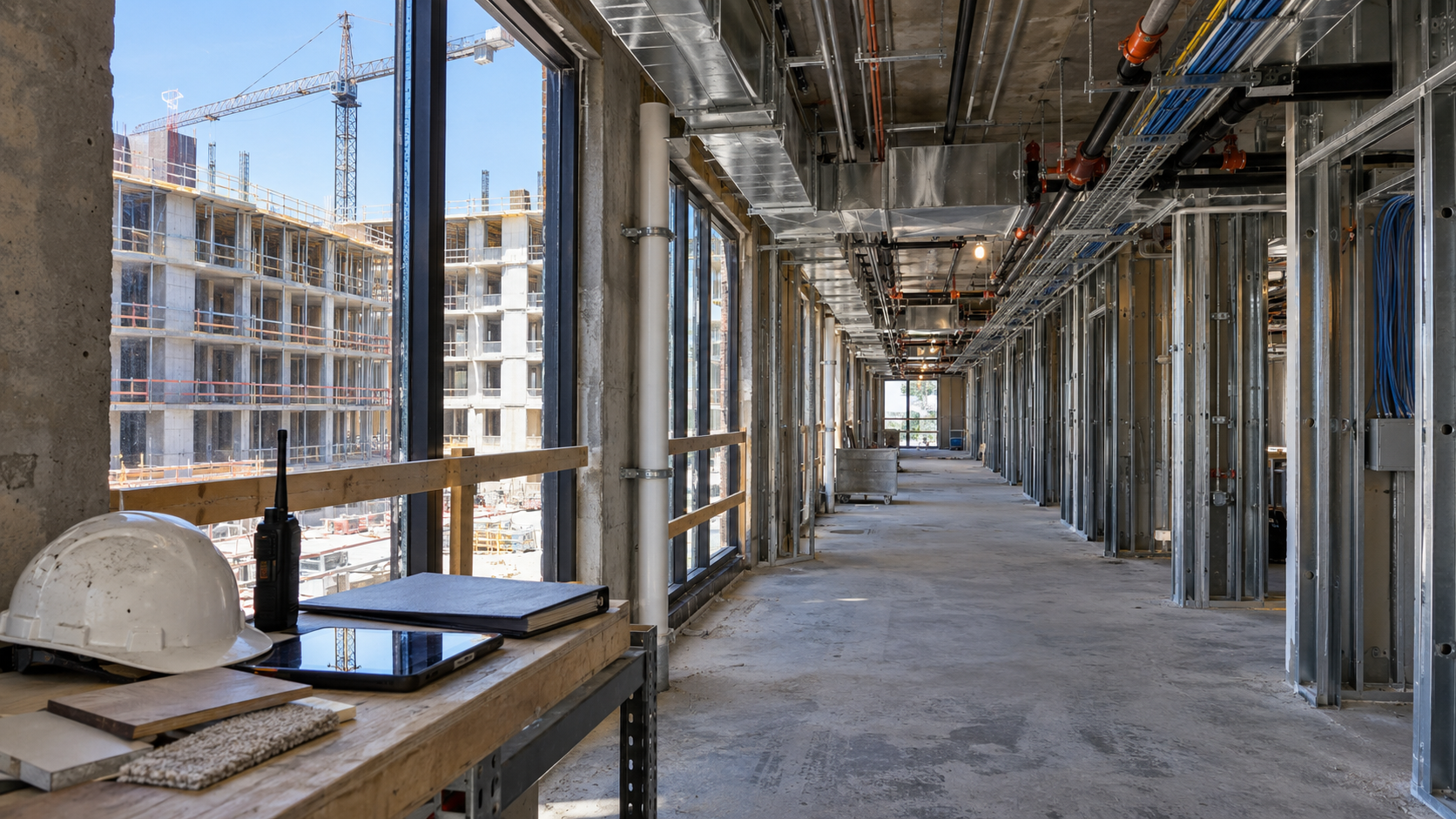
Low-voltage plans should push fiber into the building, the data closets, and ideally to each unit. When fiber is home-run through microduct—a small, flexible conduit—damaged strands can be replaced by re-pulling through the existing path, avoiding invasive rework. Fiber to each unit supports multigigabit tiers today and prevents disruptive retrofits later.
Once your physical pathways are accounted for, there should be a predictive wireless design that defines optimal access point placement. That wireless network design must be modeled while taking into account the building’s materials, physical obstructions, and resident movement. Interference should be managed continuously, with monitoring that identifies and mitigates RF noise from neighboring networks, appliances, and IoT devices before it becomes a help-desk issue. Upstream, the backhaul and core need documented redundancy for links, routing, and power, with failover that is tested, time-stamped, and reported.
Quality providers will “show their math” with site-specific RF and capacity plans, plus post-installation survey results that confirm assumptions. Ask for the operational playbook as well: how the network will be supported, repaired, and scaled as device counts rise and expectations shift.
3) Observability to the Edge
Troubleshooting should not hinge on guesswork. Require providers to have end-to-end telemetry: client health, RF conditions, network service statistics, resilient backhaul, and application responsiveness, correlated by unit and device. Your provider should be able to identify the root cause of service impacting escalations, fixing without bouncing the issue to onsite staff.
Ask to see live dashboards mapping every unit and common area to installed gear, signal quality, and current status. If they can’t show it, they can’t support it.
4) Integrate with Your Operations
Integration should make the property run measurably smoother. A next-generation partner connects directly to your PMS to auto-create resident identities, pre-provision service before key exchange, and automate renewals, transfers, and move-outs so connectivity is never a manual task. Unit turns should trigger policy resets and credential hygiene automatically, while new residents inherit the correct plan, private credentials, and permissions without tickets. Portfolio reporting should roll up by asset, unit, and resident, linking activation rates, churn, upgrades, and ticket volume to leasing velocity and reputation scores. Integration is not a feature; it is the operational foundation that reduces site workload, protects accounting accuracy, and delivers day-one resident satisfaction at scale.
5) Be Prepared with Scalable Bandwidth
While 1 Gbps may meet many current needs, the rapid rollout of multigigabit tiers (2.5, 5, and 8 Gbps) will compress both the price and the perceived value of 1 Gbps. For example, if a nearby community advertises 2.5 Gbps at $90 while your 1 Gbps plan is $80, prospects view your offer as dated rather than affordable, and renewals become discount conversations. As multigigabit marketing normalizes, 1 Gbps drifts toward the “basic” tier with lower ARPU.
Protect the asset with architecture that scales without reconstruction: fiber to the unit, multigigabit-capable devices, and Wi-Fi 7 with 6 GHz enabled to deliver true multigigabit throughput where residents actually use it. Establish upgrade milestones to progress from 1 to 2.5 to 5 Gbps, ensure backhaul is ready for 10+ Gbps as adoption grows, validate device-level performance during peak hours, not just at the main data closet, and align the commercial model so higher tiers can be activated instantly and priced to defend ARPU as 1 Gbps commoditizes.
6) Clarify the Support Model
Assess support with the same scrutiny as the network. Confirm who answers resident and staff calls, when they are available, and whether most issues are solved on first contact. Ensure the team has real-time visibility so they act proactively, not only after tickets build up. Ask for a concise workflow and two or three recent case examples showing time to detect, time to resolve, and the corrective actions that prevented recurrence. Expect clear KPIs, regular updates during incidents, and a brief quarterly review of lessons learned.
Quick Evaluation Checklist
- Instant, secure, and automated resident onboarding
- Segmented, auditable networks for residents, staff, vendors, and guests
- End-to-end telemetry that proves root cause without onsite intervention
- Seamless move-in/move-out flows that reduce internet-related tickets
- Defined lifecycle plan with refresh milestones and cost transparency
- Fiber driven deep into the property, ideally to each unit via microduct
- Latest-generation Wi-Fi with 6 GHz band enabled
- Scalable speed tiers ready for a multigigabit future
- Clear infrastructure ownership with defined exit terms
Internet Subway Checks All The Boxes
If you want these outcomes at your communities, choose Internet Subway. We deliver multigigabit service with Wi-Fi 7, employ fiber-to-the-unit designs, and integrate with PMS platforms to automate operations. We segment residents, staff, and IoT securely and provide full-stack visibility from device to backhaul. It’s essential that we align network performance with asset performance by tracking peak-hour experience, roaming success, and support ticket volume, then translate those metrics into smoother activations, upgrade revenue, and resident satisfaction.
Ask for a property assessment and a side-by-side comparison. Internet Subway will map current conditions, identify quick wins, and outline a plan that minimizes disruption. Start with one asset, verify improvements in satisfaction and NOI growth, then scale across the portfolio with confidence.