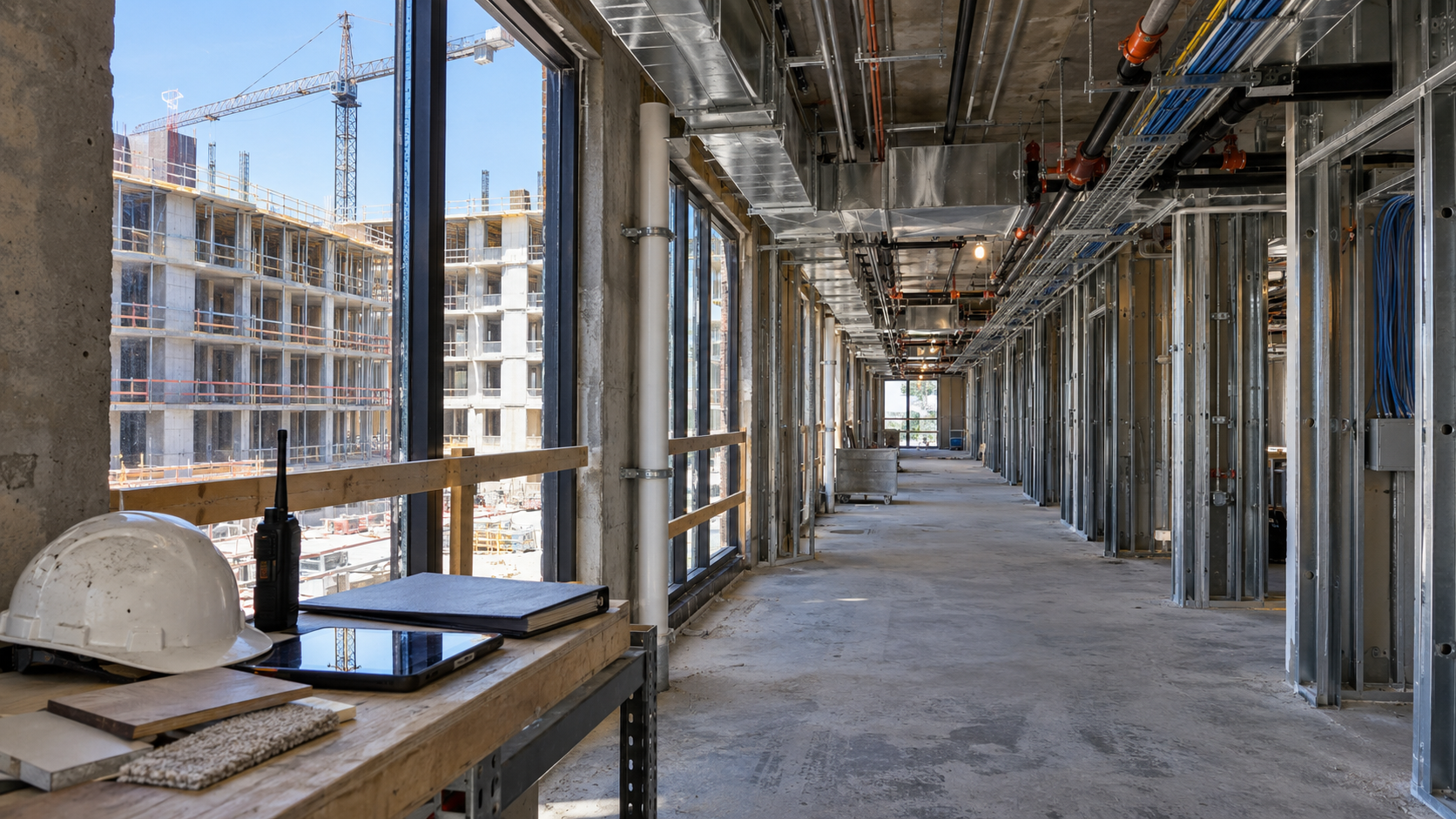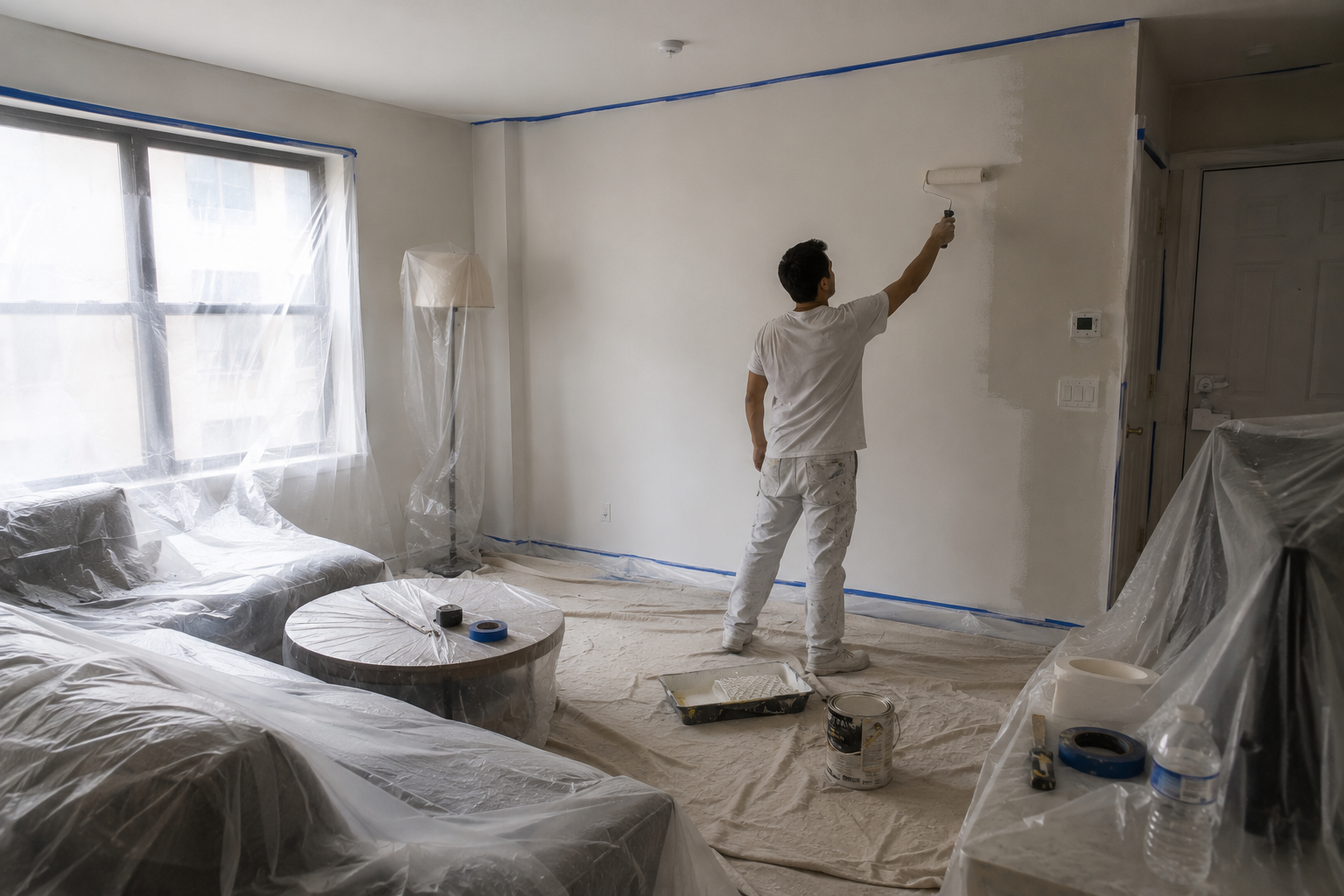

The biggest reason property owners and operators avoid a fiber-to-the-unit retrofit at existing properties is not often not the price. It is the disruption they believe the project requires. They hear “fiber to every apartment” and picture sheetrock opened up, dust in occupied units, contractors in hallways, residents upset, and site teams buried in complaints. That assumption stops good projects cold. The numbers may work, the resident experience may improve, and the property may gain a real competitive advantage, but none of that gets reviewed if the owner believes the only path is a messy, invasive construction project.
And they are right to be cautious. Running new cable through finished walls usually means cutting into sheetrock, fishing wire between studs, and patching every hole that gets made along the way. Drywall work is not clean work. Joint compound has to cure, sanding leaves a fine film on everything, and paint touch-up rarely perfectly matches the existing wall.
On an occupied property, that work does not stay contained to a single wall. Contractors move through hallways, residents have to be notified, access has to be coordinated, and someone from the site team usually ends up managing the schedule. Even small cuts and patches create dust, noise, cleanup, and follow-up visits. If the work touches hundreds of apartments, a minor inconvenience in one unit becomes a property-wide disruption. That is where complaints start, site teams get pulled away from their actual jobs, and renewals get put at risk. For most operators, that fear is enough to end the conversation before the numbers are ever run. It does not have to be.
There Are Alternative Solutions
Every multifamily community is built a bit differently, so no fiber retrofit plan is exactly the same. To accommodate for the variety, there are many tools in the fiber network design toolkit. In many cases Internet Subway will deploy fiber to the unit in existing buildings using Lightera Invisilight, a surface-mount fiber system built for retrofit environments. The technology has been used in more than one million installations worldwide since 2012, and it does not require cutting drywall, fishing wire through walls, or turning an occupied building into a construction site.
Invisilight uses an ultra-thin 0.6mm optical fiber that adheres directly along the natural edges of a room, including baseboards, trim, moldings, and corners. The fiber follows the existing lines of the apartment instead of forcing a new pathway through the wall, and once it is installed it is barely noticeable. This enables us to terminate the fiber inside the unit, exactly where needed.
In the hallways, a unique 4-16 fiber MDU hall cable runs along corridor walls, again following trim lines and wall edges. Point-of-entry modules then transition fiber from the hallway into the unit at the doorframe with a small surface-mounted fitting. The fiber is also designed for the reality of older buildings. It handles tight turns around doorframes, baseboards, closets, and corners without signal loss. Having this level of flexibility is incredibly valuable since the design and deployment have to work inside a building that is already standing.
The Retrofit Process
A brownfield deployment starts with a property assessment. The Internet Subway team tours and documents the building with a 360° camera, reviews existing pathways, identifies telecom spaces and data closet locations, and maps where fiber can run along the trim, corners, and surfaces already in the building. The design, materials, and installation process are developed to minimize construction, mess, and resident inconvenience.
For garden-style and low-rise properties, a product like Lightera’s facade solution can run fiber vertically along the exterior of the building, often tucked near downspouts or exterior edges. From there, it can transition into each unit at the point of entry or into the attic for distribution. For mid-rise and high-rise buildings, the hallway system distributes fiber from the riser through the corridor, with the in-unit run handled by the adhesive fiber system.
Inside the unit, the work is quick. A trained installer can typically complete the in-unit fiber run in thirty minutes or less, depending on the layout. For an occupied 200-unit property, that means the deployment is measured in weeks, not months. Residents need a scheduled visit, not a relocation plan.
Existing Properties Should Consider FTTU
Fiber-to-the-unit changes what the property can offer residents and what the owner can build into the operating model. It supports symmetrical multigigabit service, upgrade tiers from 1 Gbps to 2.5, 5, 8 Gbps and beyond, epic Wi-Fi inside the unit, and a move-in experience where the internet is ready the day the resident gets the keys. It also creates the foundation for a properly structured technology fee and the NOI that comes with it.
Without fiber to the unit, the property is limited by whatever the legacy infrastructure (often aging coaxial cable) can support. While that may be sufficient or acceptable today, it will continue to become a weaker position over time as resident expectations rise and more devices depend on the network. A building that retrofits fiber now is positioned for 2028 and 2030, not just for what residents accepted a few years ago.
Operator’s Common Concern
“The building is occupied and some of these residents have been here for years. We cannot disrupt them with a massive construction project or mess in their unit.”
The concern, that is not what this deployment looks like. There’s often no sheetrock work required in the project. There is an installer, a spool of ultra-thin adhesive fiber, a scheduled visit, and a clean path along the existing trim and surfaces of the unit. The point-of-entry module goes in at the doorframe, the fiber runs to the right location, and the ONT is connected.
The apartment looks the same when the installer leaves. The difference is that the unit now has fiber. Since that fiber has a 10-30+ year lifespan, it’s an incredible retrofit opportunity.
Owners usually picture a far bigger and messier project than a brownfield fiber retrofit actually is. Before assuming an existing property cannot support fiber to the unit, ask for a property assessment. In most cases the path is cleaner, faster, and less disruptive than expected.
Contact our team to learn more or schedule a brownfield property assessment.