
When residents sign up for internet service, they usually see marketing that shouts about speed. Gigabit! Multigig! 8 Gbps! The assumption is simple: bigger number = better experience.
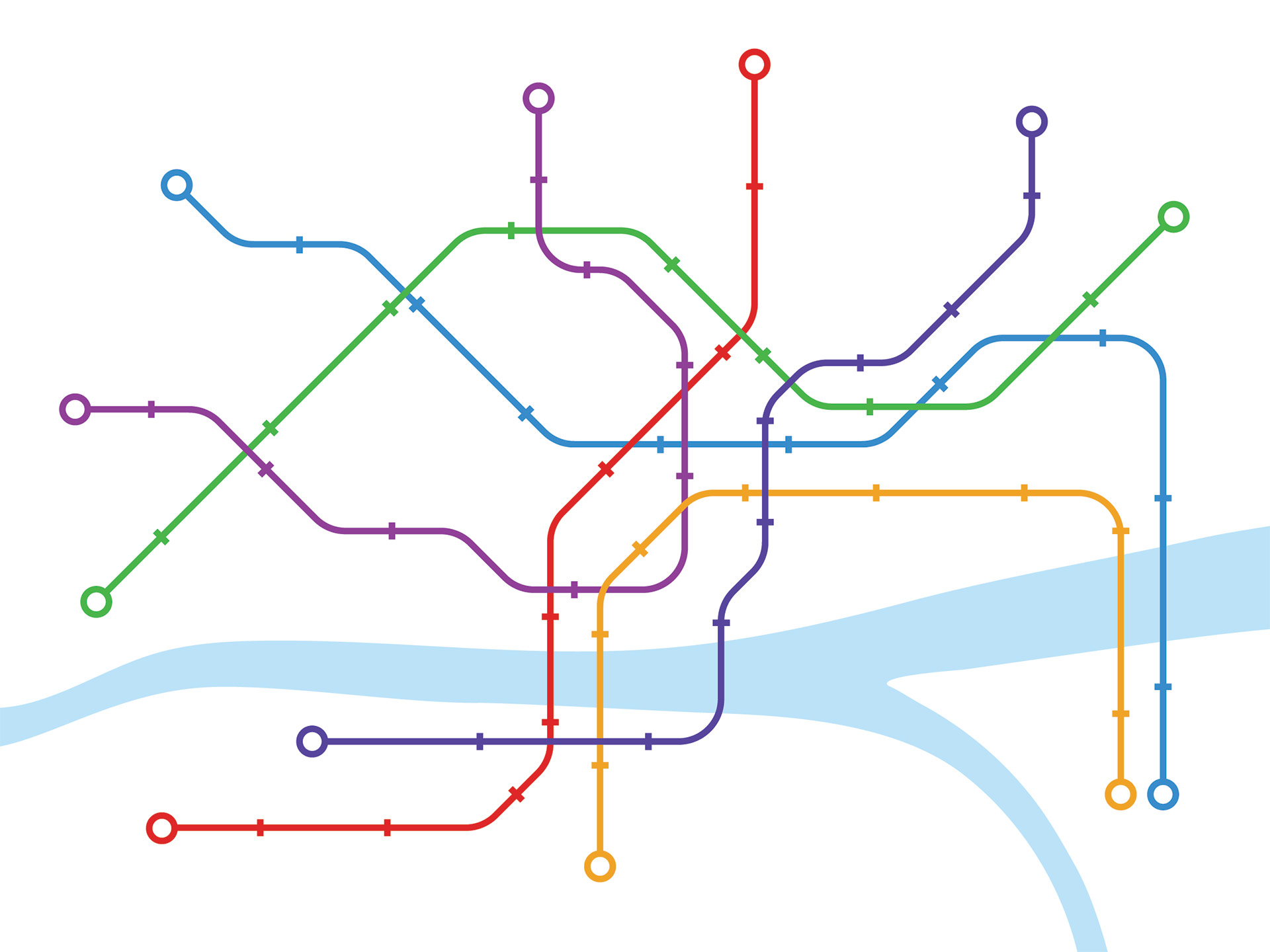
But the truth is more nuanced. The internet doesn’t just move data; it’s a complex transportation system. And the better way to understand it is to picture the internet as a subway system. 🚇
At Internet Subway, we like to break it down this way:
Bandwidth = Train Capacity
Let’s imagine your internet plan as a subway car.
- A 1 Gbps internet package is like a 1,000-seat train.
- A 100 Mbps package is like a 100-seat train.
The seats represent bandwidth, how much data can move at once. With a gigabit plan, there’s more capacity. Many passengers (data streams) can ride together without crowding. With 100 Mbps, the train is smaller, and if too many people try to hop on at once, it fills quickly.
This is why bandwidth matters: it’s what allows multiple devices in a household (or hundreds of units in a community) to stream, game, video call, and download simultaneously without contention.
But bandwidth isn’t the whole story.
Latency = Train Speed
Imagine two trains:
- The 1,000-seat train takes 25 milliseconds (ms) to get to the station and back.
- The 100-seat train gets there in just 2 ms.
Which one feels faster to the rider?
Hands down, the smaller, quicker train.
This is latency: the measure of how long it takes for a single piece of data to travel from your device to its destination and back.
Latency isn’t about how much you can carry at once, it’s about how quickly each trip is completed.
And in everyday internet use, that responsiveness is critical.
Latency Matters More Than People Think
Here’s where the metaphor really clicks…
Most internet activity isn’t about moving giant files from point A to point B. Instead, it’s about thousands of small, rapid trips:
- A video call sends dozens of small packets per second.
- A gaming session exchanges constant, time-sensitive updates.
- Loading a web page requires multiple back-and-forth requests before it even begins to render.
If each of those trips is slowed by high latency, the experience suffers. Even if you have plenty of seats on your subway car, your riders (apps) are waiting at the platform, tapping their feet.
That’s why, in real-world use, 100Mbps at 2 ms latency will feel faster than 1Gbps at 25 ms latency.
The Subway Station: Data Centers and Beyond
Let’s extend the analogy further.
Your home or apartment is like a subway platform. When you send traffic out, your packets board the train and head toward the subway station — the local data center or internet exchange.
At that station, passengers (data) may transfer trains. Some go directly to their destination (maybe a nearby streaming server), while others hop onto long-haul lines that stretch across the country or even under the ocean.
The more efficient the route, the better your experience. But if your first train is slow to arrive, everything downstream feels sluggish, no matter how many seats it has.
Bandwidth + Latency = True Internet Quality
So which is more important: bandwidth or latency?
The answer is both.
- Bandwidth ensures capacity. Without enough, multiple users and devices in a household or community end up competing, leading to congestion.
- Latency ensures responsiveness. Without low latency, even small tasks feel delayed, no matter how much bandwidth you’ve bought.
This is why smart network design always considers latency first, then scales bandwidth to match resident demand. A network with great latency and multigigabit capacity is like having high-speed trains with enough cars to carry everyone comfortably.
Applied to Multifamily Communities
For multifamily property owners and operators, understanding this distinction is crucial.
Marketing “gigabit” is easy. Residents recognize the number. But if your network isn’t engineered for low latency, with the right architecture, fiber pathways, routing, and peering, you’ll hear about. Video calls will stutter. Gaming will lag. Apps will feel sluggish.
On the other hand, when you prioritize latency and pair it with ample throughput, the network becomes invisible. Residents move in, activate their service, and it just works. Property teams hear less, residents enjoy more, and NOI rises with fewer operational headaches.
Following the tracks
The internet isn’t just about how big your train is. It’s about how quickly it arrives, how efficiently it transfers at the station, and how reliably it keeps running.
At Internet Subway, we engineer networks with the subway system in mind:
- Latency first → fast, responsive trips.
- Throughput second → enough seats for everyone.
Put them together, and you get the kind of resident experience that feels instant, no waiting at the platform, no crowding in the cars. Because in the end, the best networks aren’t the ones residents notice. They’re the ones they never have to think about. That’s what Internet Subway is all about. Contact us today to learn more!