
Once an owner sees that better connectivity can create NOI, improve the resident experience, and take pressure off the property team, the next question is usually practical.
How would this actually work at one of my properties?
That is the right question. A model can look great in a spreadsheet and still fall apart at the property. If the rollout creates resident complaints, ties up the site team, misses the construction schedule, or runs into old carrier agreements nobody read closely, the model does not work. Affordable housing teams already have enough to manage. Internet should not become another project dumped on the leasing office.
There are two common paths to rolling out a successful multifamily connectivity program. One is a retrofit at an existing property with residents already living there. The other is a new development where connectivity can be designed into the project from the beginning. The work is different, but the goal is the same: build a network that works for the residents, works for the property team, and makes sense for the owner.
The Retrofit
A lot of multifamily communities are still operating around telecom decisions made years ago. The property may have aging coax, old wiring paths, an incumbent carrier agreement, and hundreds of residents with individual internet accounts. The owner may have little to no connectivity NOI, the resident experience may be inconsistent, and the leasing office usually has no real control over any of it.
Take a 300-unit affordable or workforce housing community built in the early 2000s. Occupancy is strong. People want to live there. Almost every resident already has internet service because, of course, they do. The issue is not demand. The issue is that the property is not participating in the value, and the resident experience is being controlled by a carrier relationship the owner may not have looked at in years.
The concern is usually disruption. Nobody wants to tear up parking lots, create access issues, generate resident complaints, or turn the property team into the help desk for a network project. A bad rollout can create more problems than it solves, so the order of operations has to be right.
Before anyone talks about pulling fiber or changing the resident experience, you need to understand what rights already exist at the property. Who has access? What agreements are in place? Are there marketing rights, wiring rights, easements, renewal windows, or restrictions that affect timing? A lot of owners know who the incumbent provider is, but they have not always looked closely at the actual agreement in years. That review tells you what can be done now, what has to be timed around an existing contract, and where the owner may already have more flexibility than they realize.
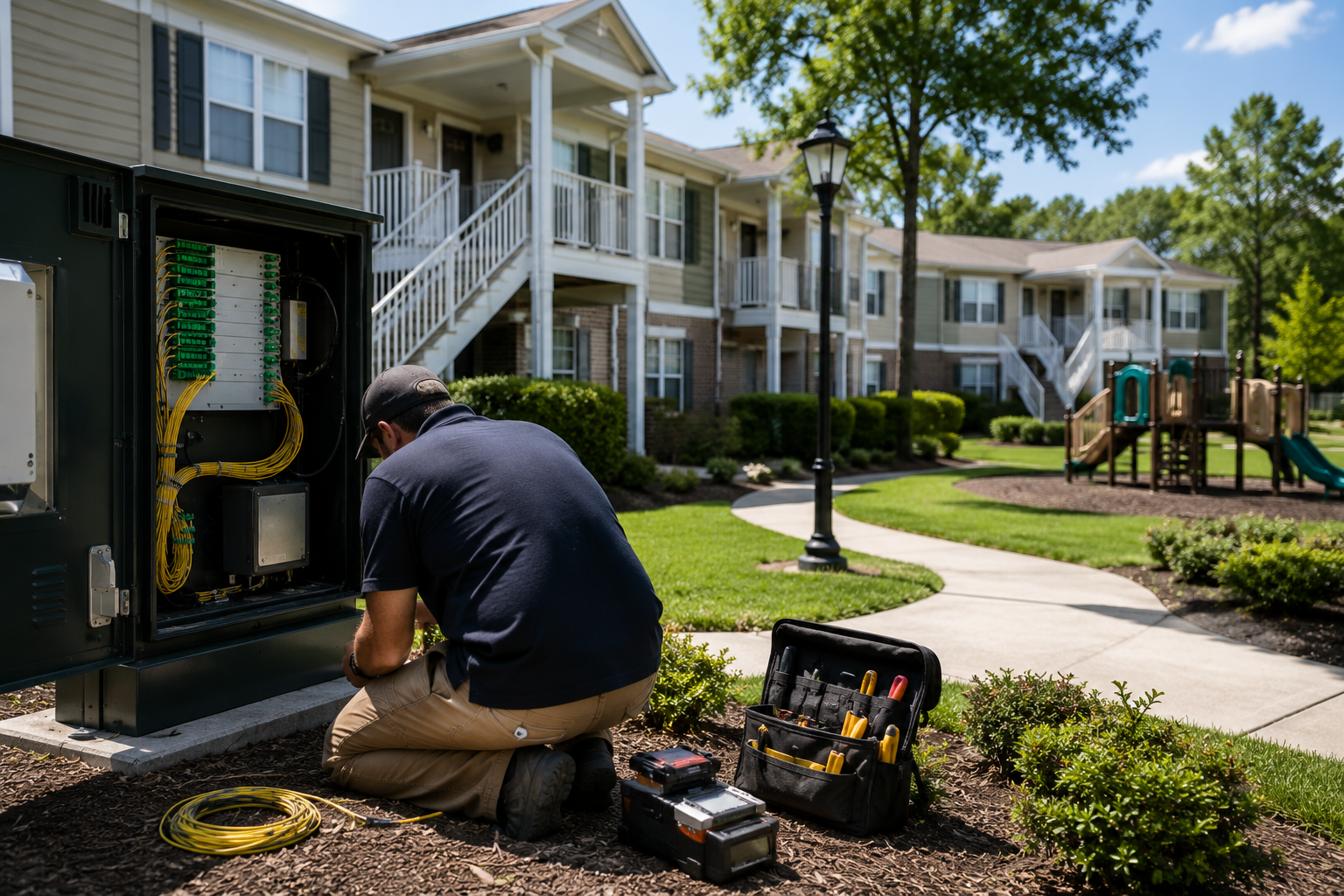
Once the contract picture is clear, the work moves to the property itself. The Internet Subway teams starts with a desktop review, and then walks and records data on-site. We work to understand how the buildings are laid out, where the existing telecom rooms are, how fiber would move through the property, where power is available, what pathways already exist, and how residents would actually be served. A garden-style property, a mid-rise, and a scattered-building community are not the same project. The design has to follow the property, not some standard drawing that looked good in a proposal.
The install plan should be built around minimizing disruption. Owners are not worried about whether fiber works. They are worried about resident complaints, unit access, construction coordination, and whether the site team is going to get buried in questions. The goal is to do as much work as possible outside the unit, coordinate required access carefully, and avoid forcing residents through a hard cutover before the new service is ready.
The incumbent provider also does not need to disappear overnight. In many cases, the cleanest rollout is to bring the new network online and let residents move over as the value becomes obvious. If the base service is strong, activation is simple, and pricing makes sense, adoption does not have to be forced by the leasing office. Residents can switch because the offer is better.
The property team should not become tech support, an installation scheduler, or the middleman between the resident and the ISP. Their job is to run the property. Our job is to make the connectivity layer work in the background, with clear resident onboarding, support, and reporting. When it is done correctly, the network starts producing adoption and upgrade revenue without turning into another burden for the site team.
New Development
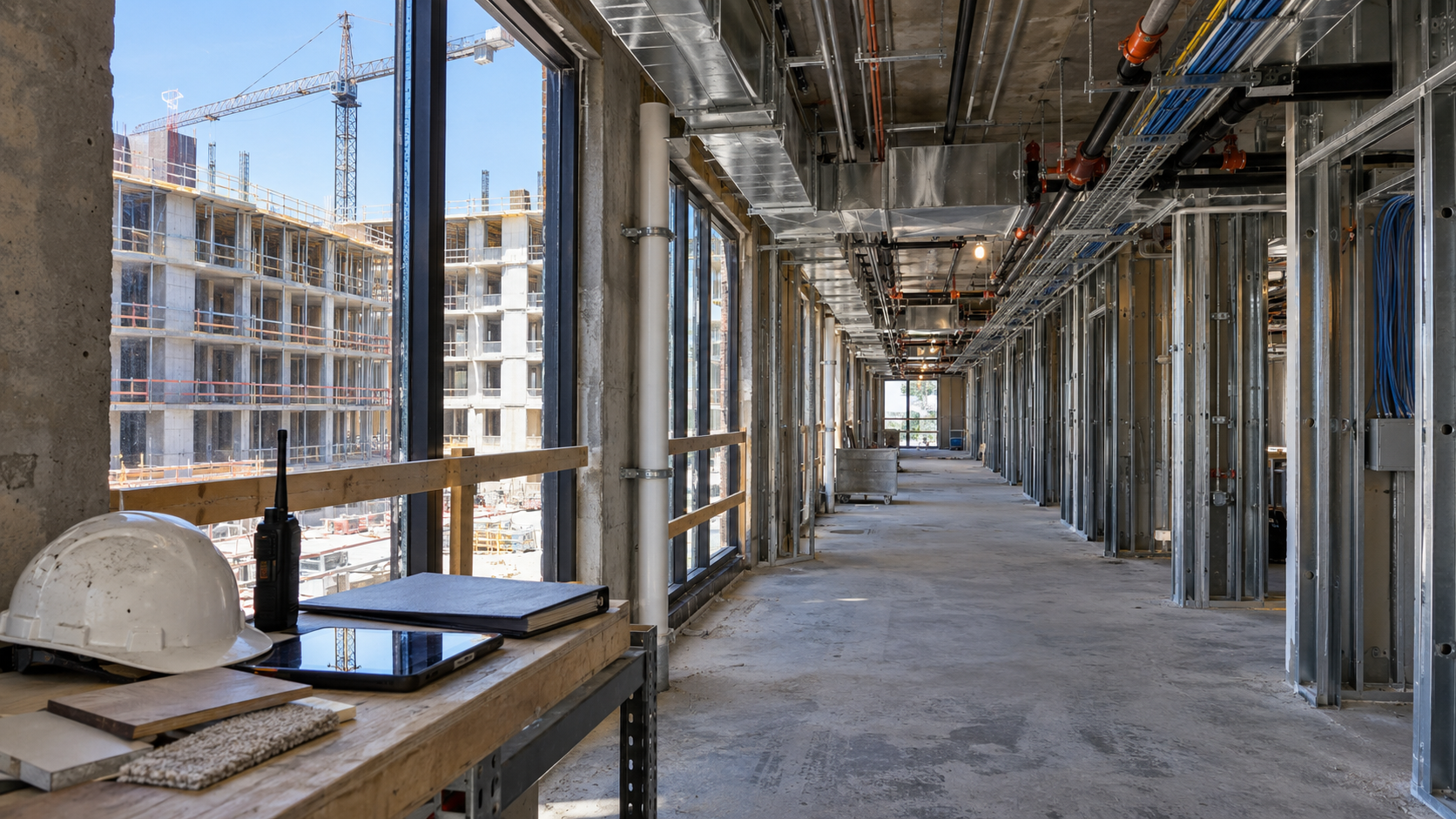
New development is cleaner because the network can be planned before the building is finished.
If the project is still in design, connectivity should be treated like building infrastructure, not something a carrier figures out after the fact. That is true for market-rate, mixed-income, and LIHTC projects. In affordable housing, the capital stack is already complicated, so getting the network designed early usually lowers cost, simplifies deployment, and creates better long-term value.
A lot of projects still miss this. The plans usually include mechanical, electrical, plumbing, civil, and architectural, but often low voltage wiring (including internet service) still gets treated like somebody else’s problem. Then the project gets further along, the pathways are constrained, equipment locations are not ideal, and everyone is trying to solve a permanent infrastructure problem with a late-stage carrier install.
That is backwards. Internet is part of the operating infrastructure of the building. It supports the resident experience, leasing, property operations, smart access, cameras, common areas, and whatever building technology gets layered in later. The right pathways, equipment locations, power, fiber routes, and unit-level service model should be part of the project before those decisions get locked.
This is where Internet Subway’s multifamily focus shows up. We are not forcing a traditional carrier deployment into an apartment community. We are designing the network around how the property will operate after lease-up: how residents activate service, how the leasing team stays out of internet issues, how upgrades are handled, how common areas are served, and how the same infrastructure can support other property systems over time.
For LIHTC developers, connectivity can also play into the scoring process. More state QAPs are recognizing broadband, in-unit connectivity, common-area access, and resident technology as part of the housing quality package. The details vary by state, but the direction is clear. Broadband is no longer something to think about at the end.
New development is also the right time to decide how the network should be funded. Some owners may want to fund and own the network directly. That can be the cleanest structure for long-term control. Others may prefer Network as a Service, where Internet Subway deploys and operates the network so the owner can preserve capital and still participate in the upside. In some LIHTC situations, a multi-year prepayment structure may make the most sense because it can reduce the resident-facing monthly cost and improve opt-in adoption.
That decision should happen early. It affects the project budget, the underwriting, the resident offer, and the operating model. There is not one structure that fits every property. The structure should match the deal.
When connectivity is built in from day one, lease-up gets easier. Residents can have internet credentials before move-in. They walk into the unit and connect. No technician appointment, no carrier brochure, no waiting period, and no leasing team getting pulled into internet problems during one of the busiest parts of the resident lifecycle.
For the resident, day-one internet is part of the first impression. For the leasing team, it removes friction. For the owner, it helps adoption ramp as the property stabilizes. Residents remember whether the basics worked when they moved in. Internet is one of the basics.
What the First 30 Days Should Look Like
The evaluation process does not need to be complicated. The first conversation should be about the portfolio, the development pipeline, and the properties where connectivity might move the needle. Which assets have outdated telecom? Which properties are still tied up in old carrier agreements? Which new developments are early enough in design to make the right decisions? Which communities could benefit from better resident experience, property team experience, NOI creation, or all three?
From there, the next step is reviewing telecom agreements on a few properties. That is usually where the real opportunity becomes clear. Sometimes the best candidate is not the property everyone assumed. Sometimes a property that looks promising has contract timing issues. Sometimes an owner has more flexibility than they thought. The contracts define the starting point.
After that, the owner should have a property-specific proposal, not a generic pitch. That proposal should show the deployment plan, resident offer, capex structure, NOI projection, upgrade model, timeline, and what the site team will actually be asked to do. That is what an owner, asset manager, developer, or CFO can evaluate.
Affordable housing owners do not need another generic internet pitch. They need a model that works inside the real constraints of the asset: resident affordability, LIHTC rules, limited site team bandwidth, existing carrier agreements, capex pressure, and long-term hold periods.
Affordable housing should not get second-class connectivity because the standard market-rate model does not fit. The model has to be designed for the constraint.