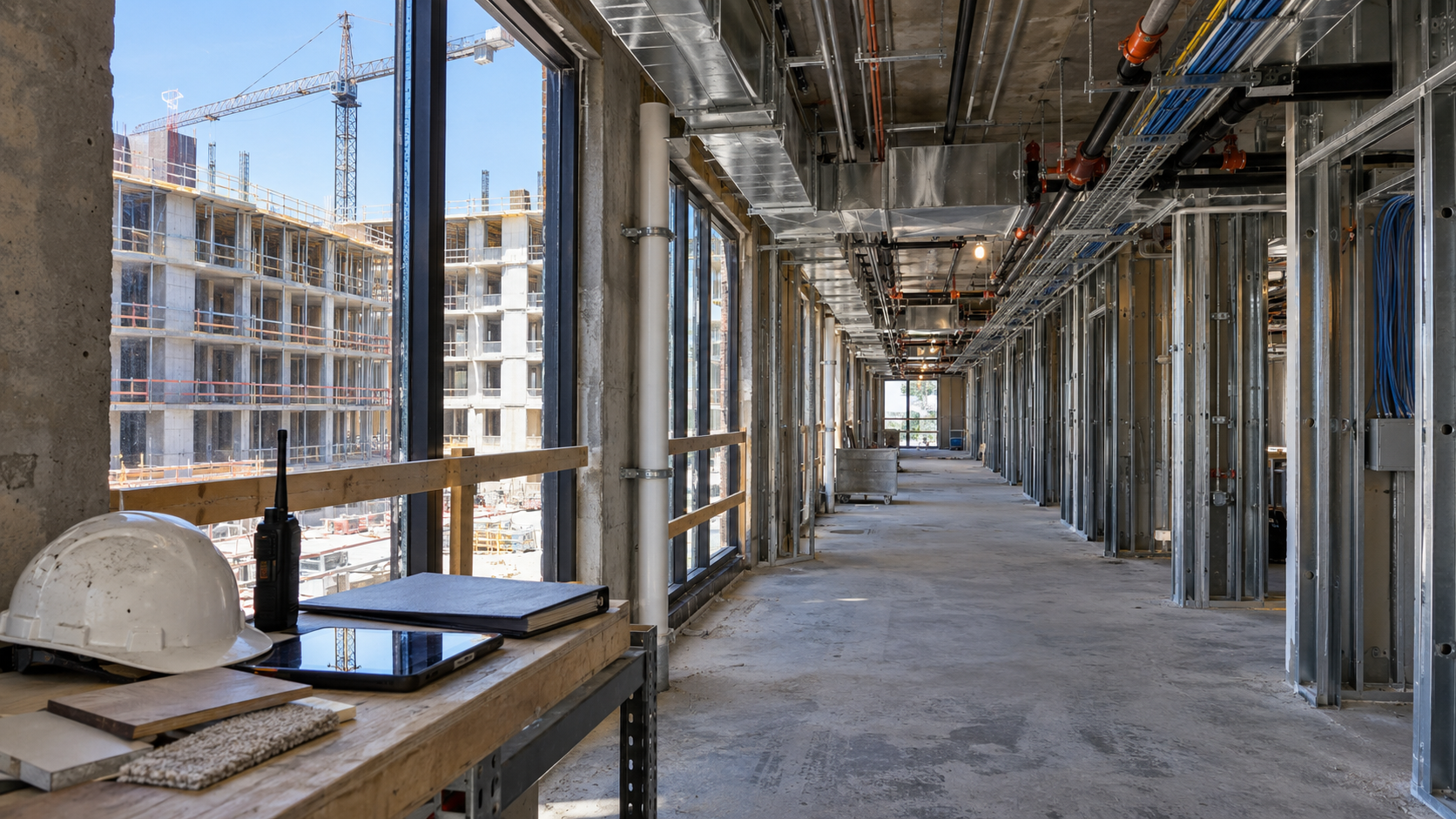
In multifamily development, the low-voltage pathway is one of the easiest things to value-engineer and one of the hardest things to fix later. It rarely gets the same attention as unit finishes, amenity spaces, mechanical systems, or the main electrical design. It is often treated as a small coordination item between the architect, electrical contractor, low-voltage contractor, and service providers.
That is a mistake.
The physical pathway for fiber, conduit, spare conduit, microduct, telecom rooms, sleeves, risers, and handholes will determine how flexible the property is for years after construction is complete. It affects internet service, property operations, smart building systems, cameras, access control, cellular solutions, future ISP changes, and future technology upgrades that may not even be part of the original design package.
The cheapest time to create that flexibility is during construction. Not after the building is occupied. Not after the first provider is already installed. Not after residents are complaining. Not after the owner realizes the property needs another circuit, another carrier, another pathway, or another fiber route and there is nowhere clean to put it.
Pathway is infrastructure, not an accessory
Owners and developers tend to think about broadband in terms of service. Who is the provider? What speed will residents get? Is the property using bulk internet, retail internet, managed Wi-Fi, fiber to the unit, or some other model?
Those are important questions, but they sit on top of a more basic question: can the property physically support the network design you want, and can it support the next design you may need?
The answer depends on pathway.
A good pathway plan accounts for how service enters the property, how it moves between buildings, how it reaches telecom spaces, how it gets to each floor, and how it ultimately reaches each unit. It also accounts for future use cases. That means spare conduit, appropriately sized sleeves, pull boxes in the right locations, microduct where it makes sense, and enough physical space in telecom rooms and cabinets to support more than the bare minimum Day 1 installation.
When this is done well, the property has options. When it is done poorly, every future change becomes more expensive, more disruptive, and more limited.
The problem with designing only for Day 1
Many low-voltage designs are built around the immediate scope. The project needs one internet provider, one fire alarm pathway, one access control system, one camera system, one elevator phone solution, and maybe a few other operational networks. The drawings are created to get those systems installed and the building opened.
That may satisfy the construction schedule, but it does not always satisfy the long-term ownership plan.
A property that is expected to operate for decades should not be designed around the minimum pathway needed for the first certificate of occupancy. Resident expectations will change. Smart building systems will change. Carrier options will change. Bandwidth demand will continue to rise. Owners may want to bring in a different provider, add a backup circuit, upgrade from copper to fiber, add private networks for building systems, deploy cellular equipment, support EV charging infrastructure, or connect new amenity spaces that were not part of the original network scope.
If there is no spare pathway, every one of those future decisions becomes a construction project. That may mean trenching through finished landscaping, cutting asphalt, opening walls, core drilling, fishing cable through crowded risers, disturbing residents, or trying to reuse pathways that were never designed for the new requirement.
The cost difference is not subtle. A spare conduit installed during construction may be a small incremental cost. Adding that same pathway after occupancy can require mobilization, restoration, resident coordination, access control, permitting, and significant disruption.
Conduit and spare conduit are cheap compared to regret
Conduit is not glamorous, but it is one of the best insurance policies a multifamily developer can buy. The same is true for spare conduit. In many projects, the incremental cost of adding spare pathway during construction is modest compared to the cost of coming back later.
This is especially true for garden-style communities, podium projects, and large multi-building developments where the route from the right-of-way to the main telecom space, and then from building to building, may be difficult to recreate after the site is finished. Once sidewalks are poured, landscaping is installed, parking lots are striped, and residents are living on site, every underground change becomes harder.
Spare conduit does not mean the owner has to decide every future technology question today. It gives the owner the ability to decide later without being trapped by the original design. It creates optionality.
That optionality has real value. A property with clean, usable pathway can support competitive provider bids, faster upgrades, easier repairs, and cleaner technology refreshes. A property without it may be stuck with the original provider or forced into expensive workarounds.
Microduct creates even more flexibility
Microduct is especially useful when the goal is to preserve long-term fiber flexibility. Instead of installing one large conduit and filling it with cable, a microduct system creates smaller individual pathways that can support future fiber placement with less disruption.
That matters because fiber needs are not always fully known during construction. A property may start with one service provider, then later need additional fibers for a second provider, a cellular system, a managed property operations network, a camera expansion, a smart building platform, or a new circuit to an amenity building. Microduct allows fiber to be added or replaced in a more controlled way without treating every future change like a major rebuild.
For developers, the value is not just technical. It is practical. Microduct can help separate use cases, preserve spare capacity, and reduce the risk that one provider or one system consumes the only available pathway. It also gives ownership more leverage over time because the building is not physically locked into the first network design that happened to be installed.
This is the same reason we pay close attention to low-voltage plans before construction gets too far along. The pathway design determines whether the property will be easy to serve, easy to upgrade, and easy to support. A good network design starts long before equipment is mounted on a wall.
Pathway affects more than resident internet
Resident internet is usually the most visible use case, but it is not the only one. Modern multifamily properties increasingly depend on connected building systems. Cameras, access control, package rooms, elevators, leasing offices, fitness centers, coworking spaces, thermostats, leak detection, parking systems, and EV chargers may all need reliable connectivity.
Some of those systems will operate on separate cabling. Some will need VLAN separation. Some may rely on a shared property operations network. Some may require dedicated circuits or physically separate pathways depending on the design, ownership model, or vendor requirements.
If the low-voltage pathway is too tight, those systems start competing for space. The property team may be forced into compromises that were avoidable during construction. Cables get routed through less desirable paths. Telecom rooms become crowded. Future troubleshooting becomes harder. Adding a new system may require disturbing existing systems.
That is not just a construction issue. It becomes an operations issue.
A property with organized pathway is easier to document, easier to maintain, and easier to troubleshoot. A property with improvised pathway is harder for every vendor who touches it after turnover.
The riser matters too
In mid-rise and high-rise buildings, the riser is just as important as the underground pathway. It is common to see designs that technically provide a route from the main telecom room to each floor, but leave little room for growth. Sleeves may be undersized. Pathways may be shared between too many systems. Telecom rooms may be too small or poorly located. Pull distances may be difficult. Firestopping may become complicated because nobody thought through future cable additions.
The riser should not be designed only for the first set of cables. It should be designed for the life of the asset.
That means clear vertical pathway, reasonable pull access, enough space for future cable, and coordination between electrical, low-voltage, fire alarm, security, and broadband design. It also means thinking about whether fiber should be brought all the way to the unit, whether unit media enclosures are properly located, and whether the in-unit pathway supports the service experience residents will expect.
Once the building is complete, riser changes are painful. They often involve occupied corridors, fire-rated assemblies, access coordination, and expensive labor. Getting it right upfront is far easier.
Pathway decisions can limit provider choice
Owners often want provider flexibility, but the building’s physical infrastructure may quietly limit that flexibility. A property may have a service agreement that appears flexible on paper, but if there is only one usable pathway into the property, one crowded telecom room, or no spare conduit between buildings, the practical ability to change or add providers may be limited.
That is especially important when owners are evaluating bulk internet, fiber-to-the-unit, or next-generation managed network models. The owner may want the ability to move away from a legacy provider, bring in a new operator, add redundancy, or take more control of the network over time. Those options are much easier when the pathway supports them.
The pathway is not the service agreement, but it can have the same effect. If the property is physically difficult to serve, the owner has fewer choices.
Coordination has to happen early
The right time to solve pathway is not during final punch. It is during design, before the site work and building systems are locked in. That is when routes can be adjusted, spare conduit can be added, telecom spaces can be resized, sleeves can be coordinated, and the owner can make informed decisions about what the property should support.
This requires coordination between the developer, architect, civil engineer, electrical engineer, low-voltage designer, general contractor, broadband provider, and major technology vendors. It is not enough for each trade to draw what it needs independently. Someone has to look at the property as a connected system.
Where does fiber enter the site? Is there a second entrance path? How does the network reach each building? Are there spare conduits between key locations? Are handholes placed where they will actually be useful? Are there clean pathways to amenity buildings, gates, garages, and outdoor areas? Are telecom rooms large enough? Are risers designed for future capacity? Are unit media panels in usable locations? Can the property support fiber to the unit now or later?
These are not theoretical questions. They are the questions that determine whether the property is easy or difficult to upgrade five years from now.
Future flexibility is cheapest before the concrete is poured
Every developer has to manage budget, and not every property needs the most elaborate pathway design. But there is a difference between responsible cost control and designing out future flexibility to save a small amount upfront.
The cheapest pathway is not always the best pathway. Sometimes it is just the pathway that pushes cost into the future, when the same work will be more expensive, more disruptive, and harder to coordinate.
Building the right pathway during construction gives the owner control. It allows the property to support better resident internet, cleaner property operations, future provider changes, smart building systems, and technology upgrades that may not be fully known today. It also reduces the risk of having to disturb residents or damage finished property later.
In multifamily, the network is no longer a nice-to-have amenity. It is part of the operating infrastructure of the building. The physical pathway should be treated accordingly.
Build the pathway now. Add the spare conduit. Plan the microduct. Protect the riser. Give the property options. The pain you avoid later is usually far more expensive than the pathway you build today.