
Most owners treat bulk internet as a five-year rate negotiation. It’s not. It’s a five-year (or longer) infrastructure decision.
Whatever gets installed at signing is what your residents live with on day 1, day 365, and day 1,800. No mid-contract hardware refresh. No quiet upgrade when something better ships. What goes in, stays in.
That makes the technology decision at signing one of the most consequential calls you’ll make for an asset. And with Wi-Fi 7 shipping and multigigabit going mainstream, it deserves far more scrutiny than it usually gets.
The state of Wi-Fi 7
Wi-Fi 7 isn’t a future technology. It’s here, in phones, laptops, tablets, and IoT devices, with more devices shipping every month. Wi-Fi 6E opened 6GHz. Wi-Fi 7 is what makes it worth having.
Higher throughput. Lower latency. Better performance in dense environments. That last one matters most for multifamily; dozens of households competing for airtime in close proximity is exactly where older Wi-Fi generations break down first.
Meanwhile, ISPs are marketing 2, 5, and 10 Gbps on billboards and TV. A resident who just moved from a building advertising 5 Gbps doesn’t experience your 1 Gbps as comparable. They experience it as a downgrade.
The 5-year math
Sign today on Wi-Fi 6 hardware with 1 Gbps as your top tier, and here’s what the next five years look like:
Year 1-2. Service is functional. Residents are satisfied. Technology feels current enough.
Year 3. Wi-Fi 7 devices are everywhere. New lease-ups in your market advertise Wi-Fi 7 and multigigabit tiers. Your infrastructure still works; the marketing gap is starting to show.
Year 4-5. The gap isn’t marketing anymore. Residents with Wi-Fi 7 devices aren’t getting Wi-Fi 7 performance. Prospects on tours ask about speeds. Your 1 Gbps top tier has become the entry-level offer in your comp set. Renewals get harder.
This isn’t just about consumer marketing. Industry projections for 2030 center on households needing symmetrical 2 Gbps to keep up with typical usage. Charter already reports 40% of its new fiber customers choosing 2Gbps or higher plans today. A bulk contract signed this year at a 1Gbps ceiling expires right as households need twice that. The cycle is faster now and AI is supercharging things.
Three non-negotiables
Future-ready isn’t a phrase, it’s a spec. In a bulk deployment, it means the infrastructure going in today has to deliver what residents expect at year four, not what satisfies them at year one.
Three things have to be true.
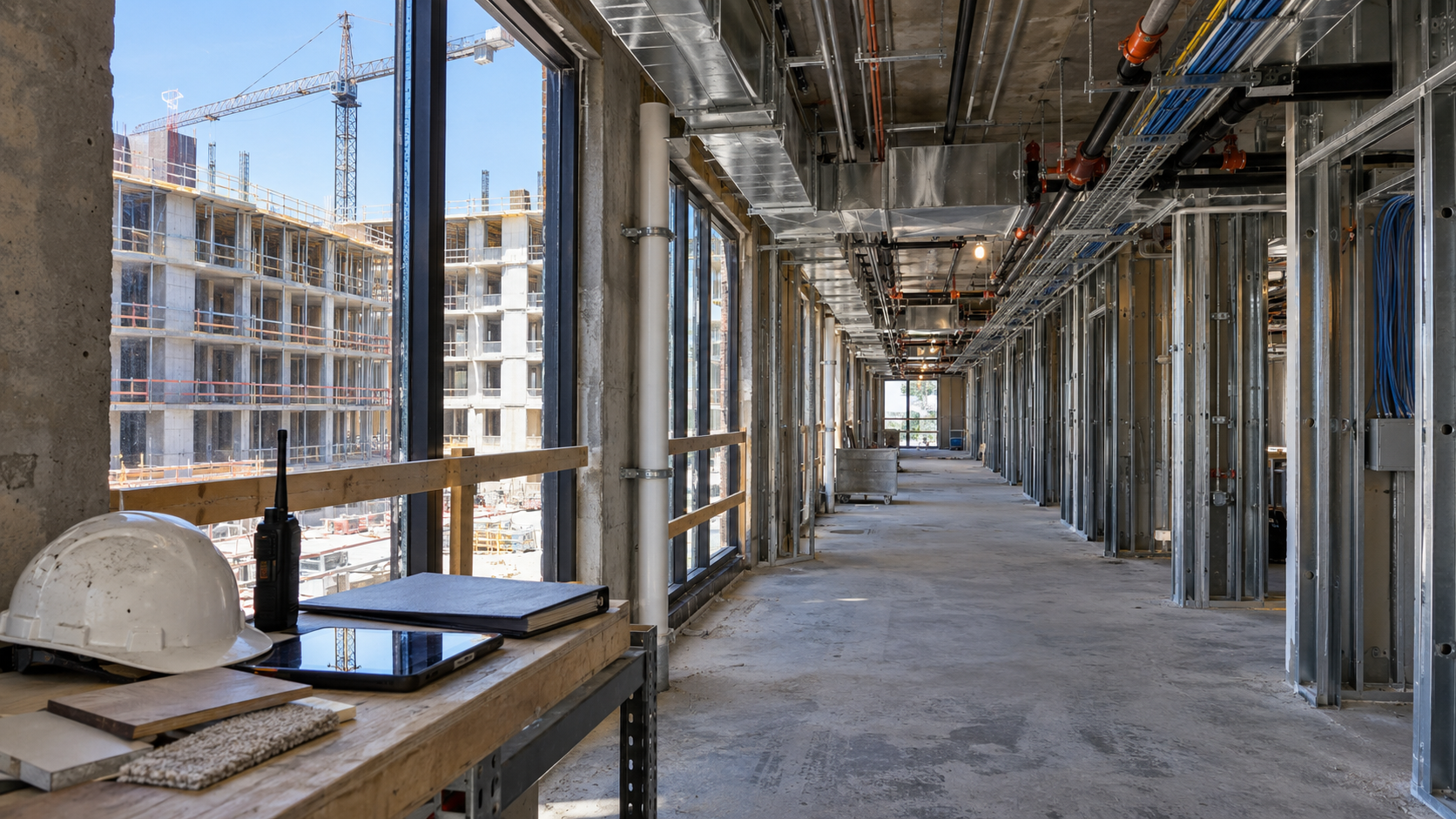
Home Run Cabling. Having the right cabling to each unit is required. Singlemode fiber or Cat6 cable home runs to each unit enable current and future network performance. With proper equipment installed on top of the right home run cabling, residents move from 1 Gbps to 2.5 Gbps to 8 Gbps without a technician touching anything inside the unit.
Wi-Fi 7 access points. Wi-Fi 7 hardware deployed today will still be current-gen in three years. Wi-Fi 6 hardware deployed today will be two generations behind by contract end. The incremental cost at deployment is small; the five-year resident experience it determines is not.
Multigigabit-capable backhaul. The APs and in-unit hardware have to be backed by upstream capacity that can actually support multigigabit to a meaningful share of units at once. A network engineered for 1 Gbps at the core isn’t quietly ready for 2.5. That capacity gets designed in, or it doesn’t exist.
Lock in the tech, not just the price
Bulk internet is one of the few amenity decisions that compounds. Get it right and it drives resident satisfaction, retention, and NOI every month for the life of the contract. Get it wrong and it’s a slow drag on all three with no clean exit.
The economics are attractive because the term is long. The term is long, which is exactly why the tech decision at signing has to be treated as a five-year (or longer) infrastructure commitment, not a procurement checkbox.
Wi-Fi 7 is here. Multigigabit is mainstream. The residents moving in this year will still be there in 2030, or they won’t, based partly on the network you’re about to lock in.
Pick one you’d still defend in 2030.