
The reason affordable housing owners should care about connectivity is not just because residents need internet. That part is obvious. The real question is whether the property can deliver better internet in a way that creates value for the asset, reduces friction for the site team, and still respects the affordability constraints of the residents.
That is the part most traditional internet models have not solved well. At a market-rate community, a required bulk internet model can be easier to underwrite. The owner can usually include the service in the resident package, and the resident base may be more tolerant of a higher monthly charge. Affordable housing is different. In LIHTC, you have to be much more careful. The service often needs to be opt-in, the resident has to choose it, and the price has to make sense.
That does not mean the model cannot work. It means the structure of the deal is far more important. Internet Subway was built specifically around multifamily, so we think about the property first. The internet service has to work for the resident, but it also has to work for the asset. It has to be simple for the on-site team, it has to make sense in the underwriting, and it has to hold up over time. That is where connectivity starts becoming more than an amenity.
What the math looks like
Palmer’s Creek Phase II is 200 unit addition to an existing unit community. At Phase II alone, the model generates roughly $80,000 of annual NOI. At standard multifamily valuation assumptions, that represents about $1.6 million in created value on one property.
That value comes from the structure of the service. The property pays a per-unit fee, residents have a strong base service option, and residents who want more speed can upgrade. A share of that upgrade revenue flows back to the property. The value is created because the model surfaces revenue that is usually left with the carrier or never captured at all.
Scale can have major impact. At 1,200 units, the same model produces roughly $500k of annual NOI, or about $10 million in value creation. At 5,000 units, it produces approximately $2.1 million of annual NOI, or about $42 million in value creation. Those are the kinds of numbers that get an asset manager’s attention, but the important point is that the value is not created by overcharging residents. It is created by making the service easier to adopt, easier to upgrade, and easier for the property to participate in financially.
Handling the build cost
The first question owners usually ask is who pays for the infrastructure. The answer depends on what the owner is trying to optimize for. Some owners want maximum control and long-term margin. Some want to preserve cash. Some are trying to make a LIHTC deal work inside a tight basis. Some want the resident-facing price as low as possible. There is not one right structure for every property, so we generally think about it in three ways.
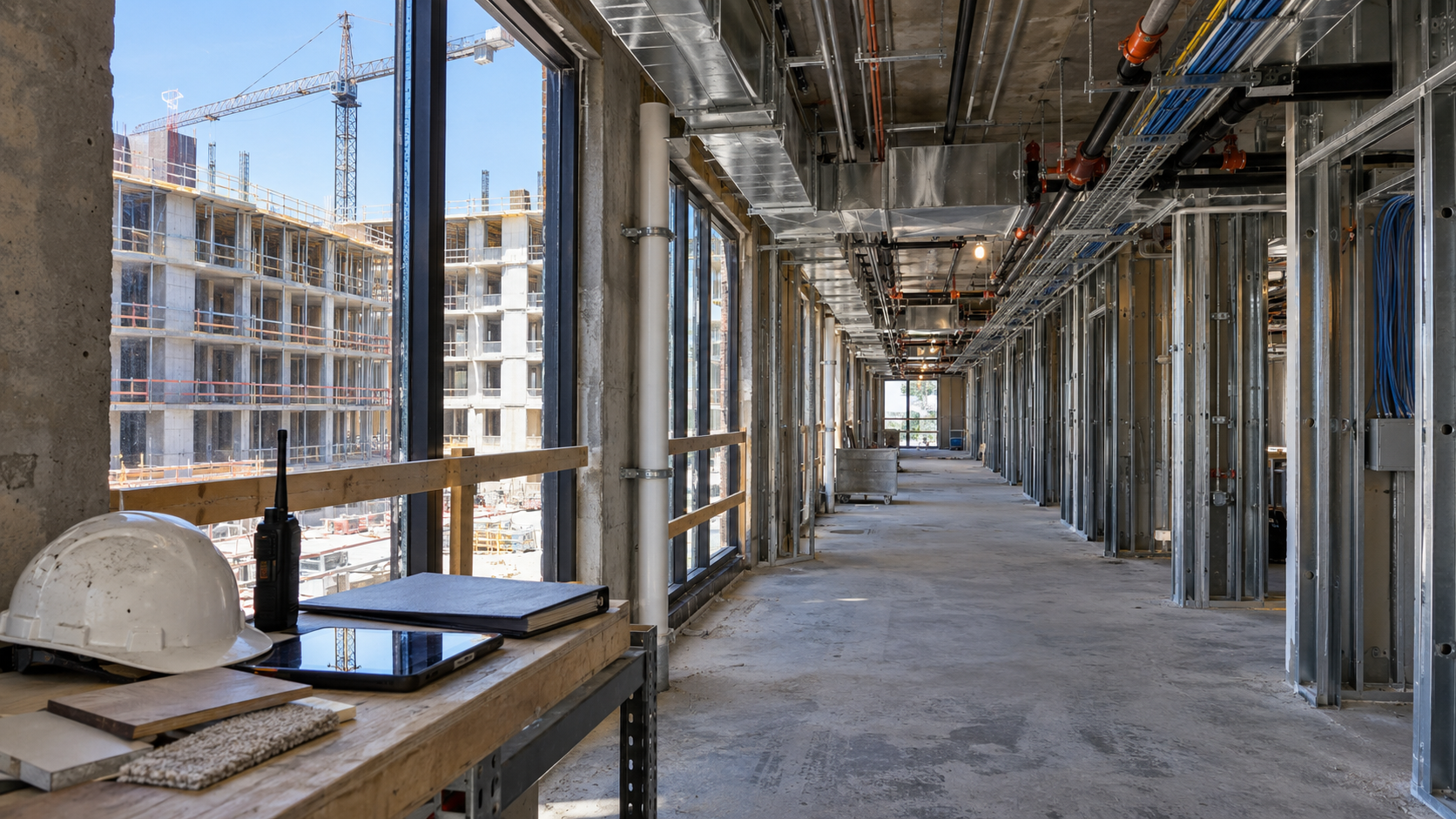
In the first structure, the property funds the deployment and owns the infrastructure. This is usually the cleanest long-term margin structure. The property has full control of the asset, and the economics are very straightforward. This can be a good fit for owners with a long hold period, available capital, and a desire to treat the network like part of the property’s core infrastructure. In new construction, especially, this can make sense because the cost of designing the network correctly from the beginning is usually much lower than retrofitting it later. The downside is obvious: the property has to fund the deployment.
The second structure is Network as a Service. In this model, Internet Subway deploys and operates the network, and the property can capture the NOI opportunity without taking on the full upfront capex burden. For affordable housing developers, this can be important. LIHTC deals are often tight. Basis matters, reserves matter, and every dollar is being evaluated. If the property can get the network built and still preserve capital for the broader development plan, that may be the better answer. This structure also works for owners who want the benefit of a managed connectivity model without becoming responsible for operating a network themselves.
The third structure is multi-year prepayment. This is something a lot of affordable housing owners have not considered, but it can be especially useful in a LIHTC environment. The property prepays for multiple years of internet service up front. That prepayment reduces the ongoing monthly network cost for those years, which gives the owner more room to offer the resident a strong base service at a price that actually fits the community. For an affordable housing community, the operator could offer a resident-facing price of $25 or $50 per month, depending on the property and the structure. That proposition becomes easy for the resident to understand and easy to accept.
Property Values
The owner math is not only about NOI generation; it should also include property operations efficiencies and extendibility. Once the network is in place, it becomes infrastructure the property can build on. That same network can support managed Wi-Fi, smart access, cameras, energy management, leak detection, package systems, common-area connectivity, and other operational technology. Owners are already paying for many of these systems in separate silos. A better network gives the property a cleaner foundation for the next decade of building operations.
That is especially important in affordable housing because these assets are long-term by design. LIHTC properties have a 15-year compliance period and a 15-year extended use period at the federal floor, with many states going even longer. You are not making a three-year technology decision. You are making an infrastructure decision for an asset that has to perform for decades. That is why I do not think owners should underbuild the network just because the property is affordable. If anything, the long-term hold period makes the infrastructure decision more important.
Most residents do not need 8Gbps internet today. That is true. A normal HD stream uses a small amount of bandwidth (about 5Mbps). A 4K stream uses more (about 25Mbps), but still nowhere near a gig (1000Mbps) by itself. A typical household can do a lot online before it gets anywhere close to multigigabit usage. But the network is not being built only for today.
In 2026, a resident may value a 1Gbps internet service at $60 to $85 per month, depending on the market. Over time, as multigigabit services become more common, the perceived value of 1Gbps will come down. Speeds that feel premium today become standard later. If you underwrite a property around 1Gbps base service at today’s value, when the market shifts in four or five years, you need a way to keep the service aligned with resident expectations.
The property should not have to rebuild the network to keep up. The base service should be able to move from 500 Mbps to 1Gbps, then to 2.5Gbps, 5Gbps, or more as the market changes. That is how the resident value holds up, and that is how the property protects the NOI line over time. The mistake is thinking about speed only as a current resident need. The better way to think about it is long-term asset flexibility.
Connectivity at affordable housing communities is an asset strategy conversation. The property needs a service residents will actually choose. The site team needs a model that reduces friction instead of creating more work. The owner needs economics that create value without pushing costs onto residents in a way the property cannot support.