Paint can be changed. Flooring can be replaced. Appliances wear out and are upgraded every decade. Even amenity spaces are renovated as resident expectations evolve. Most components of a multifamily property have a predictable replacement cycle, allowing ownership to modernize the asset over time without fundamentally changing the building itself.
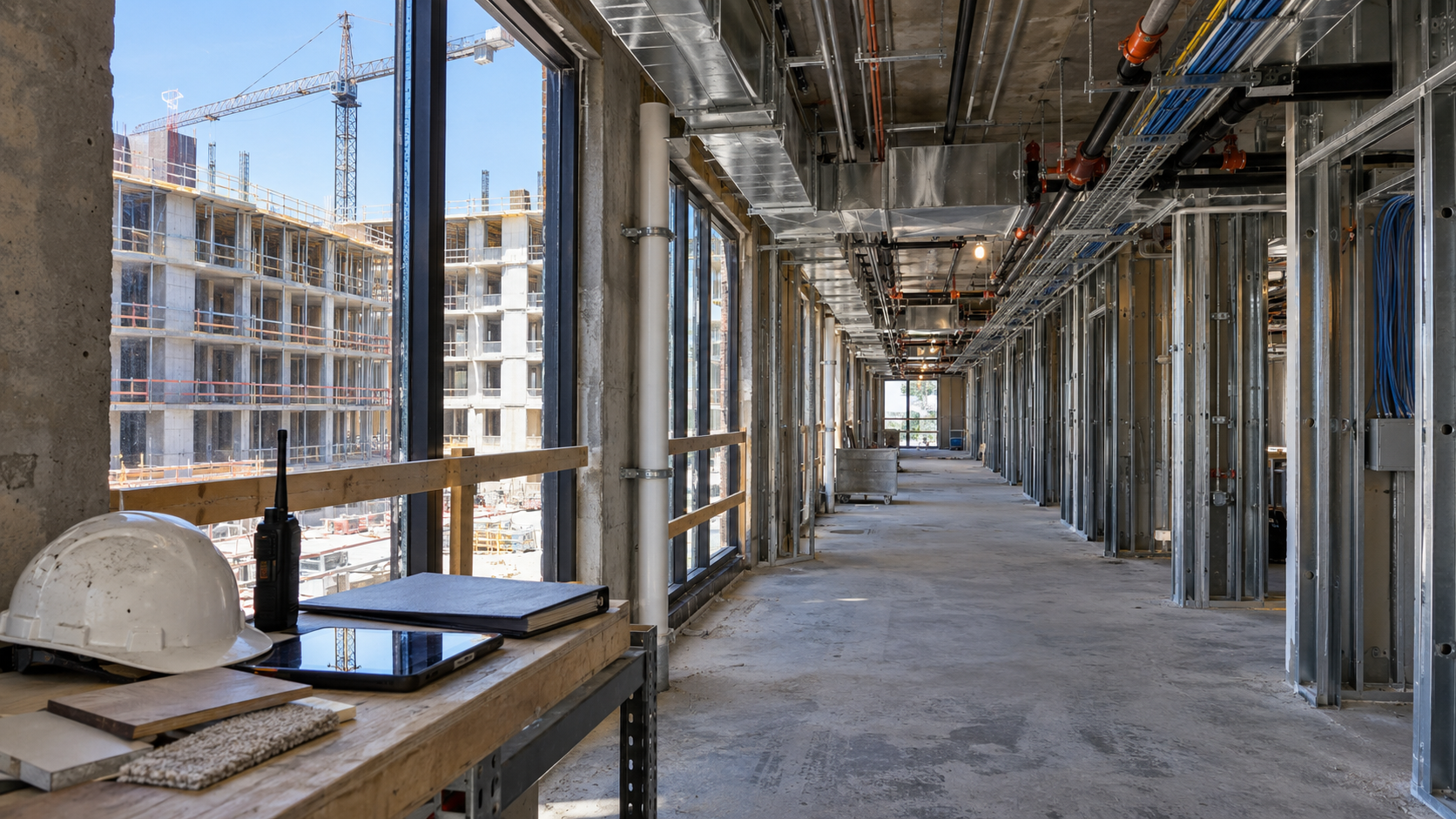
Multifamily connectivity infrastructure is different. Once conduit is buried beneath pavement, fiber is installed inside walls, telecommunications rooms are constructed, and pathways are enclosed behind drywall, those decisions become part of the building. They are expensive to modify, disruptive to residents, and often impossible to fully correct without significant reconstruction. Yet these systems increasingly support not only resident internet service, but also access control, surveillance, building automation, maintenance operations, and the technology platforms that keep a modern community running.
The challenge is that these decisions are rarely viewed as long-term asset decisions. They are often made during construction to satisfy the immediate needs of the project, without fully considering how the property will evolve over the next twenty years. Owners inherit those decisions long after the project team has moved on, and they often determine how easily the property can adopt new technologies, accommodate future providers, or avoid unnecessary capital expenditures.
While every development is unique, five infrastructure decisions consistently have the greatest long-term impact on a property’s flexibility, operating costs, and owner control.
- Design Pathways, Not Just Routes
The first decision is how communications infrastructure moves throughout the property. This includes underground conduit, building entrances, risers, horizontal pathways, pull boxes, sleeves, and every route that fiber or communications cabling will eventually follow.
Too often, these pathways are designed around the immediate installation rather than the property’s long-term needs. The conduit may be large enough for today’s network but leave little room for future expansion. A pathway may take the shortest route during construction while making future maintenance unnecessarily difficult. Separate systems may each require their own pathways because no one considered how they could share common infrastructure.
Owners should instead think of pathways as permanent transportation corridors for technology. Just as roadways are built to support decades of traffic, communications pathways should anticipate future services, additional fiber, new building systems, and changing technologies. Adding conduit during construction costs very little compared to trenching through completed parking lots, sidewalks, or landscaped areas several years later.
Engineers should design pathways with sufficient capacity, accessible routing, and opportunities for future expansion. General contractors should coordinate these installations early so they integrate cleanly with other underground utilities and structural systems rather than competing for space later in construction.
- Decide What Infrastructure Reaches Every Apartment
The second decision is what physical infrastructure extends into each residence. While discussions often focus on internet speeds or networking equipment, those technologies will change many times during the life of the building. The wiring hidden inside the walls is far more permanent.
Developers should ask whether each apartment will receive fiber, structured cabling, or another communications medium. They should also consider whether the infrastructure provides enough capacity to support future technologies that may not yet exist. A decision that reduces construction cost today may significantly limit future flexibility if additional cabling or new pathways must be installed years later.
This decision also affects provider flexibility. Infrastructure that supports multiple service models gives ownership more options throughout the life of the property. Infrastructure designed around a single deployment approach may unintentionally limit future choices, even if the owner eventually wants to change providers or introduce new services.
The objective is not to predict exactly how technology will evolve. It is to ensure that the physical infrastructure inside each residence remains useful regardless of which equipment or services are installed in the future.
- Determine Where Network Equipment Belongs Inside the Home
Modern multifamily communities depend on networking equipment installed within each residence. Whether that equipment consists of fiber terminals, gateways, routers, or future technologies, it requires a thoughtful location that balances serviceability, aesthetics, electrical access, and wireless performance.
Unfortunately, these decisions are sometimes left until late in construction, resulting in equipment being installed wherever space happens to be available. That often creates challenges for maintenance personnel, limits Wi-Fi performance, complicates future upgrades, or places equipment in highly visible locations that residents dislike.
A better approach is to intentionally design a dedicated location for communications equipment within every unit. That location should provide adequate power, convenient service access, reasonable environmental conditions, and central placement to support wireless coverage throughout the residence. It should also allow equipment to be replaced over time without requiring drywall repairs or modifications to finished spaces.
For engineers, this means coordinating electrical requirements and outlet placement early in design. For contractors, it means ensuring that framing, cabinetry, and finish details accommodate the intended installation. For ownership, it means inheriting infrastructure that can evolve as equipment changes instead of requiring creative workarounds every time technology improves.
- Build One Connected Property Instead of Multiple Isolated Networks
Resident internet is only one component of a property’s digital infrastructure. Cameras, access control, smart locks, package management, building automation, HVAC controls, irrigation systems, leasing offices, clubhouses, fitness centers, pools, maintenance facilities, and future operational technologies all require reliable connectivity.
The question developers should ask is not simply how each individual system will connect. They should ask how the property as a whole will function as a connected asset.
When each vendor designs its own isolated communications network, complexity increases over time. Additional equipment rooms are required. Separate maintenance responsibilities emerge. New technologies become more difficult to integrate because every system was designed independently.
A coordinated infrastructure strategy creates a common foundation capable of supporting both resident services and operational technology. Individual systems remain appropriately segmented for security and reliability, but they benefit from shared pathways, common infrastructure, and coordinated planning. The result is a property that is easier to operate, simpler to maintain, and better prepared for future innovation.
General contractors play an important role by coordinating the installation of multiple technology systems throughout construction. Engineers should ensure sufficient capacity exists for both current and future operational requirements rather than designing solely around today’s equipment schedules.
- Decide Who Owns the Infrastructure
Perhaps the most important decision is also the one discussed least frequently: who will ultimately own, control, maintain, and have the right to modify the connectivity infrastructure after construction is complete?
Ownership extends far beyond legal title. It determines who can approve upgrades, introduce additional providers, replace equipment, expand services, or modify the network as business needs change. These rights can significantly affect the property’s flexibility throughout its operational life.
Developers should clearly understand which portions of the infrastructure will become part of the real estate, which equipment will remain the responsibility of service providers, and what contractual rights exist regarding future modifications. They should also understand whether the infrastructure being installed supports long-term competition and flexibility or creates unnecessary dependence on a single provider or technology platform.
This is as much a business decision as it is a technical one. Infrastructure ownership influences future negotiating leverage, capital planning, operational control, and the property’s ability to adapt as market conditions evolve.
Every Decision Becomes Part of the Asset
None of these five decisions involve selecting the fastest internet service or the newest networking equipment. In fact, most of the equipment installed during construction will be replaced several times before the building reaches the end of its useful life.
The infrastructure behind that equipment is different. Conduit, pathways, telecommunications spaces, fiber distribution, and in-wall communications infrastructure often remain in place for decades. Those systems determine how easily ownership can modernize the property, adopt new technology, support future providers, and control long-term operating costs.
That is why these decisions deserve the same level of attention as structural design, mechanical systems, or electrical distribution. They are not simply construction details. They are investments that influence the property’s flexibility, serviceability, and value for years to come.
Before design is finalized, every developer should be able to answer five straightforward questions:
- How will communications infrastructure move throughout the property?
- What infrastructure will reach every apartment?
- Where will in-unit network equipment be located?
- How will resident services and property technology connect together?
- Who will ultimately own and control the infrastructure?
Those questions may seem simple during design. Once the building is complete, however, the answers become permanent. Taking the time to answer them thoughtfully is one of the most effective ways to protect the long-term value of the asset.