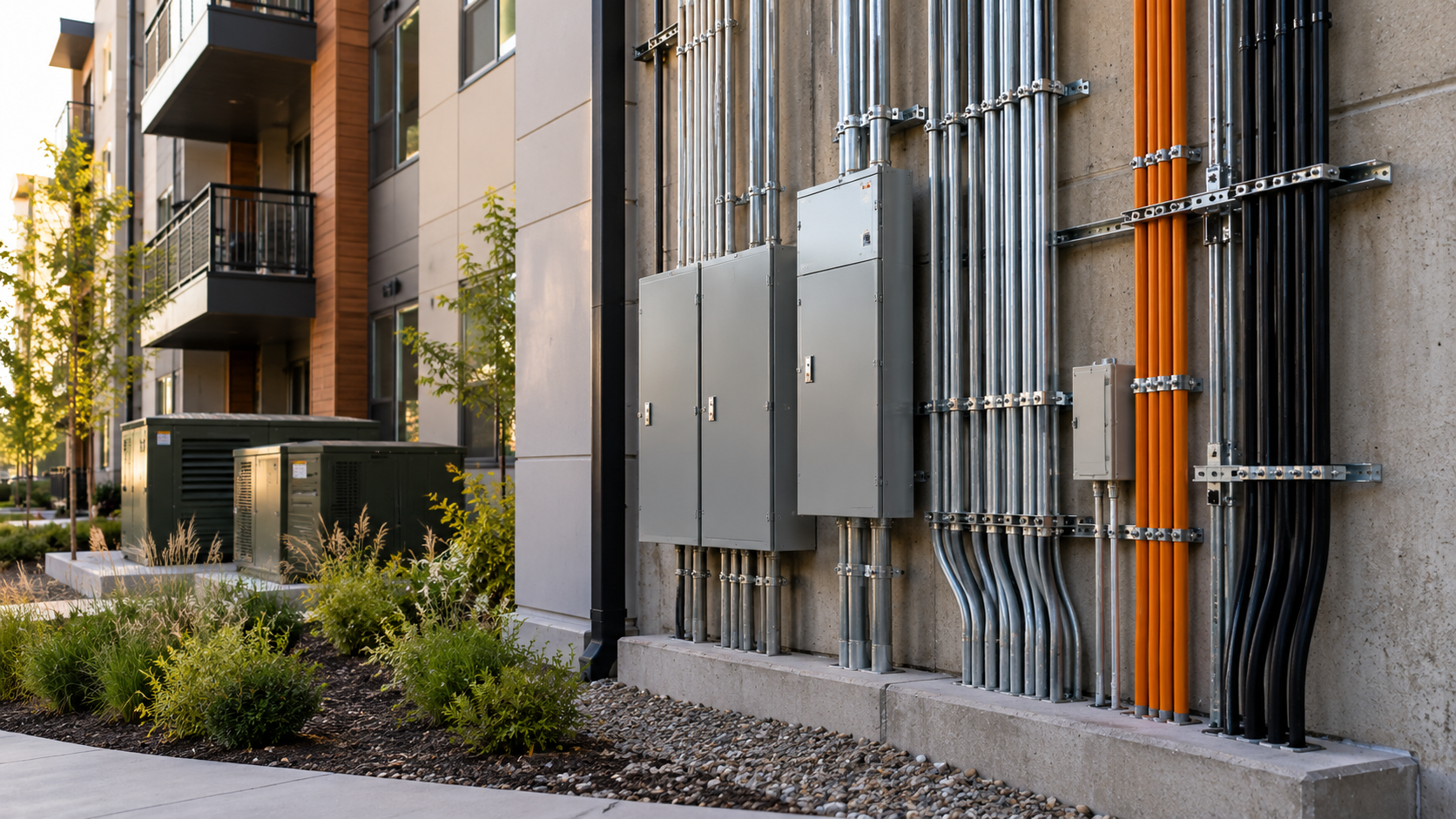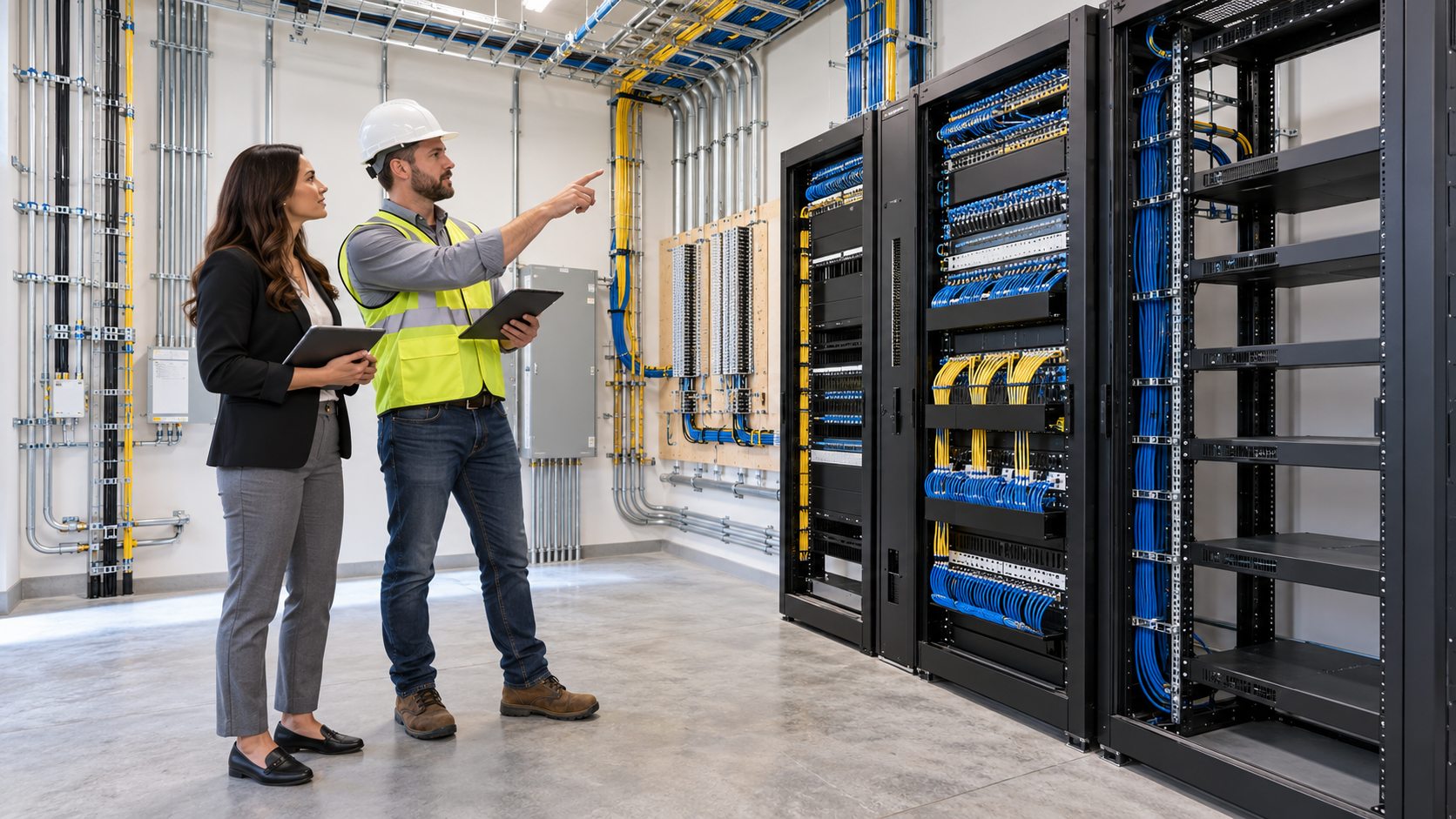

Every permanent building system goes through a process of verification before responsibility transfers to ownership. Mechanical systems are commissioned, electrical systems are inspected, elevators undergo testing, and life-safety equipment is reviewed to confirm that the completed building is ready for operation.
These processes establish more than whether individual systems function correctly. They give ownership confidence that the infrastructure has been installed, documented, and prepared for long-term use.
Multifamily connectivity infrastructure deserves the same consideration, yet connectivity turnover often begins and ends with confirming that the network works. Residents can connect, equipment is operational, and service is available throughout the property, allowing the project to move forward toward occupancy.
While those are essential milestones, they do not necessarily establish that ownership has received a complete, documented, and maintainable communications system.
There is an important difference between accepting internet service and accepting the infrastructure behind it.
A property may deliver an excellent resident experience on opening day while still having incomplete documentation, poorly organized telecommunications rooms, undocumented pathways, inconsistent labeling, or limited provisions for future expansion. Those conditions may not interfere with service immediately, but they can create unnecessary expense and operational complexity when the property eventually needs to change.
A Working Network Is Not the Same as Operational Readiness
During construction, project teams have access to the people who designed and installed the infrastructure. Engineers can explain design decisions, contractors can identify field modifications, and installers can answer questions about equipment, cable routes, pathways, and existing conditions. Much of that information remains readily available because the organizations responsible for creating the system are still actively involved. That environment changes quickly after turnover.
Maintenance teams, replacement contractors, consultants, network providers, and future owners may have no relationship with the original project team, making accurate records essential to understanding what was installed and how it should be maintained. A building should not depend on locating a former superintendent or contacting an installer years later to answer basic questions about its communications infrastructure. Connectivity acceptance should therefore establish that the system is ready to be operated and maintained independently of the construction team.
Ownership needs more than confirmation that the equipment is functioning. It needs a reliable understanding of the physical infrastructure, supporting systems, operational responsibilities, and information required to manage future changes.
Documentation Should Outlast the Construction Team
A complete connectivity turnover package is one of the most valuable things ownership can receive, particularly because communications infrastructure is often concealed within walls, ceilings, risers, telecommunications rooms, and underground pathways.
Once construction is complete, much of that infrastructure cannot be inspected without additional work. Accurate documentation becomes the primary reference for future maintenance, troubleshooting, upgrades, provider changes, and capital planning.
Owners should expect as-built drawings that reflect actual installed conditions rather than simply receiving the final design drawings.
Those records should identify telecommunications rooms, backbone routes, utility entrances, equipment locations, cable pathways, and connections between buildings where applicable. Any changes made during construction should be incorporated so future teams are working from an accurate representation of the completed property.
Supporting records are equally important.
Equipment inventories, labeling conventions, cable schedules, fiber assignments, testing results, and relevant warranty information help establish what ownership has received and provide a starting point for future work.
Where infrastructure or equipment remains under provider control, the documentation should also make those boundaries clear.
Incomplete turnover information creates costs that may not become visible until years later.
A future contractor may need to investigate cable routes, identify undocumented connections, verify available capacity, or repeat testing simply to understand the existing conditions before beginning an upgrade.
Work that should have started with a reliable set of records instead begins with reconstructing information that was available during construction.
What Owners Should Verify Before Accepting Connectivity Infrastructure
A complete multifamily connectivity turnover process should evaluate the physical condition of the infrastructure, the quality of the documentation, the results of applicable testing, and the property’s readiness for future operation.
These considerations should be established before turnover rather than left to individual interpretation during the final weeks of construction.
While the specific requirements will vary according to the property’s network design, ownership model, and contractual scope, several areas deserve attention.
| Acceptance Area | What Ownership Should Confirm |
| Physical infrastructure | Telecommunications rooms, pathways, cabling, equipment, and supporting systems are complete, accessible, and installed in accordance with the approved requirements. |
| As-built documentation | Drawings accurately reflect installed conditions, including telecommunications spaces, backbone routes, equipment locations, and relevant field modifications. |
| Testing and verification | Required cable, fiber, and applicable network testing has been completed, with results documented and delivered. |
| Equipment and labeling | Equipment inventories, cable identification, fiber assignments, and labeling conventions are complete and consistent. |
| Expansion capacity | Spare fiber, available pathways, conduit capacity, equipment space, and other planned expansion provisions have been identified and documented. |
| Operational responsibility | Ownership understands which organization maintains each portion of the infrastructure, who controls access, and how future changes will be coordinated. |
| Turnover records | Relevant warranties, supporting documentation, access procedures, and operating information have been transferred to the appropriate parties. |
The purpose of this review is not to introduce an unnecessary layer of administration at the end of construction.
It is to confirm that ownership understands the system it is accepting and has the information required to operate it without relying on assumptions or undocumented knowledge.
For projects where the service provider owns or manages portions of the network, acceptance should also distinguish between owner-controlled infrastructure and provider-controlled equipment or systems.
A functioning managed service does not necessarily mean ownership has received all documentation or control over every component, making those responsibilities important to establish before the project closes.
Physical Condition Matters Beyond Opening Day
Connectivity acceptance should include reviewing the physical condition and organization of telecommunications infrastructure rather than relying exclusively on functional testing.
Cable management, accessible equipment layouts, consistent labeling, appropriate working clearances, and organized pathways all influence how easily the system can be maintained and modified over time.
These characteristics may appear secondary when the network is functioning, but they become increasingly important as additional equipment and services are introduced.
Telecommunications rooms are a useful example because they tend to accumulate infrastructure throughout the life of the building.
Equipment is replaced, new systems are added, providers may change, and future projects must work around what is already installed.
A room that begins its operational life with organized cabling, usable access, appropriate supporting systems, and reasonable expansion space provides a much better foundation for those changes.
The same principle applies to pathways and backbone infrastructure.
Owners should understand where major routes are located, whether they remain accessible, and whether the installed conditions reflect the approved design.
When physical conditions are documented and organized from the beginning, future teams can spend less time investigating the building and more time completing the work they were hired to perform.
Future Flexibility Belongs in the Acceptance Process
Every multifamily development is designed around the technologies and operational requirements known during construction, but ownership will eventually need the property to support something different.
Network equipment will be replaced, building systems will evolve, resident expectations will increase, and new technologies will create demands that were not part of the original project.
Connectivity turnover offers an opportunity to verify that the provisions intended to support those changes were actually incorporated into the completed building.
That includes confirming planned reserve conduit, spare fiber capacity, accessible backbone routes, available equipment space, and supporting electrical or environmental provisions where applicable.
These elements may not be needed immediately, but their absence can significantly affect the cost and complexity of future improvements.
A pathway that could have been verified during construction may become considerably more difficult to investigate or modify once the property is finished and occupied.
Future flexibility should not be treated as an abstract promise that the building has been designed to accommodate technology that does not yet exist.
Ownership should be able to identify the specific provisions included in the project and understand where additional capacity is available.
Documenting those provisions gives future teams a more reliable starting point when evaluating upgrades, provider changes, or new building systems.
Turnover Is Also a Transfer of Operational Responsibility
The final stage of acceptance should establish who is responsible for the infrastructure after the construction team leaves.
Multifamily communications systems frequently involve several organizations, and the party delivering internet service may not own or maintain every physical component supporting that service.
Ownership needs a clear understanding of those boundaries to avoid confusion when repairs, modifications, or upgrades become necessary.
This is particularly relevant when responsibilities are divided between the property, service provider, network operator, and other technology vendors.
Access to telecommunications spaces, maintenance obligations, documentation control, and procedures for modifying shared infrastructure should be understood before turnover.
Without that clarity, even routine work can become more complicated because the parties involved must first establish who has the authority or responsibility to act.
A successful transition leaves ownership with both a functioning system and a clear process for managing it.
Complete records, defined responsibilities, and an understanding of the property’s existing capacity allow future teams to make decisions with greater confidence.
They also reduce the likelihood that routine maintenance or modernization will be delayed by uncertainty surrounding infrastructure ownership or access.
Accepting the Asset, Not Just the Service
Connectivity turnover should be evaluated with the same long-term perspective applied to other permanent building systems.
Owners are accepting more than equipment that works on opening day. They are inheriting the physical infrastructure, documentation, operating responsibilities, and future limitations associated with the completed installation.
The quality of that handoff can influence maintenance, modernization, provider flexibility, and capital planning throughout the life of the property.
A complete acceptance process does not require owners to predict every technology the building will eventually support.
It requires them to verify what was constructed, understand how it performs, confirm that the appropriate information has been delivered, and establish who will be responsible for managing it moving forward.
Those are reasonable expectations for any permanent building system, and communications infrastructure should be no exception.
The distinction between a working network and an operationally ready asset becomes especially important once the original project team is no longer available.
Ownership should be able to understand, maintain, and improve the infrastructure it has inherited without first reconstructing the history of its installation.
That is what a meaningful multifamily connectivity turnover process should accomplish.