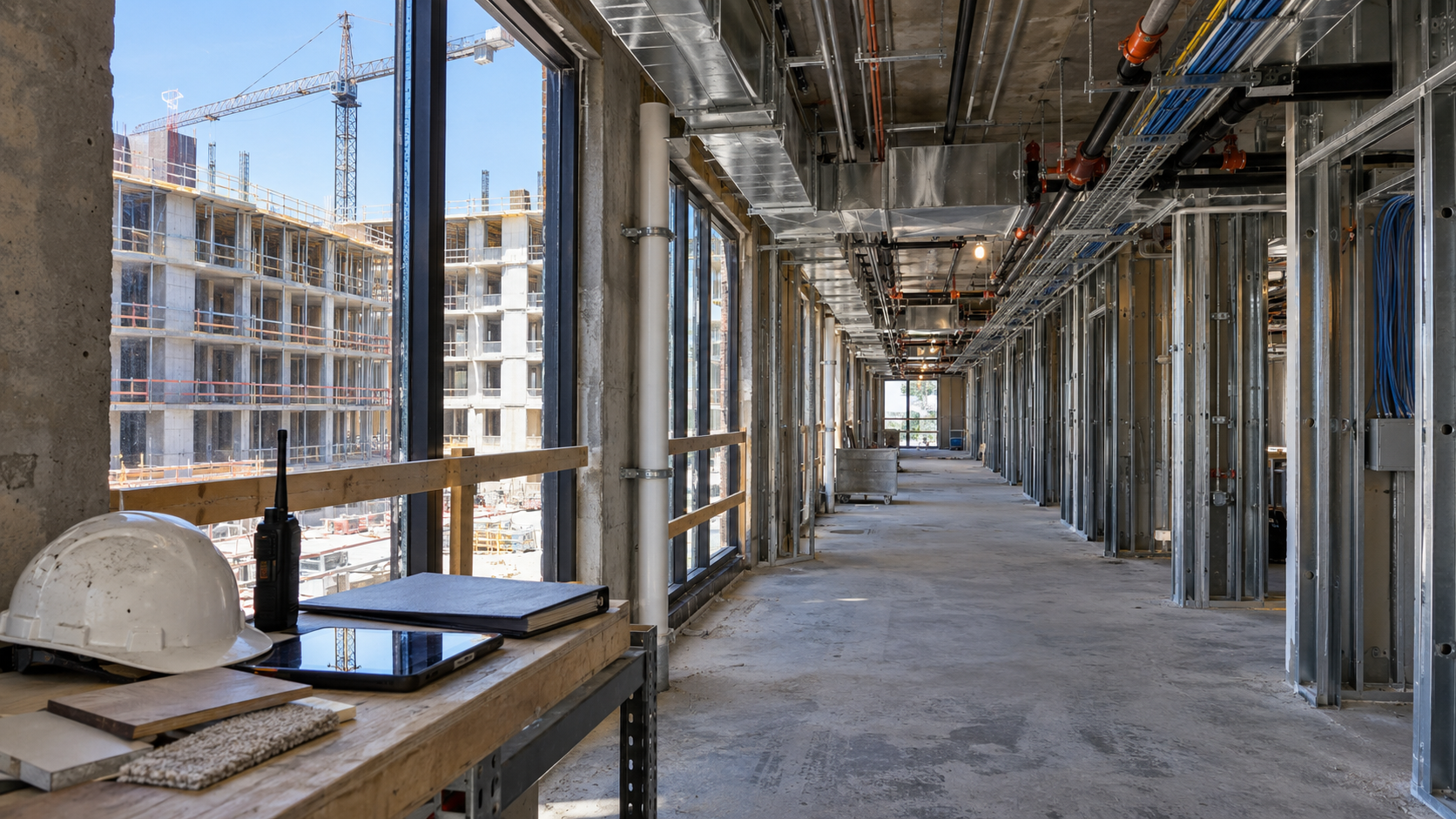

A lot of multifamily developments get surprisingly far before anyone has a complete low-voltage plan. Sometimes the low-voltage set is missing entirely. Sometimes it exists, but it is thin, generic, or disconnected from how the property will actually operate after lease-up. That is a problem because low voltage is not just a construction detail. It is the foundation for internet service, access control, cameras, package systems, common-area Wi-Fi, smart building devices, leasing office connectivity, and a growing list of property operations systems.
By the time the issue is obvious, the project may already be deep into design, pricing, or even construction. Pathways are getting locked in. Telecom rooms have been sized. Power locations have been chosen. Civil plans are moving. Architects, engineers, GCs, and ownership are all working off assumptions that may not support the technology the property will need on day one. The result is usually not one big failure. It is a series of avoidable compromises that make the project more expensive, harder to operate, and less flexible over time.
For developers, this is where a missing or incomplete low-voltage plan becomes more than a documentation issue. It can affect construction sequencing, resident experience, property operations, future technology, and long-term asset value. The property may still get built, but the connectivity foundation may not support how the community needs to function.
Low Voltage Is Not Just Wire
Low voltage is often viewed too narrowly. It gets reduced to cable counts, conduit paths, telecom closets, camera drops, and access control points. Those details matter, but they are not the full picture. The better question is not “Where do we need cable?” The better question is “What needs connectivity for this property to operate properly?”
That list is much longer than it used to be. Resident internet service needs a reliable building and unit-level network plan. Common areas need connectivity. Leasing offices need service. Cameras need backhaul. Access control needs reliable connections at doors, gates, elevators, amenity spaces, and maintenance areas. Package rooms, smart locks, thermostats, leak detection, energy management, intercoms, call boxes, EV chargers, digital signage, and building systems may all need network access.
If those needs are not identified early, the low-voltage plan can look complete on paper while still missing the way the property will actually function. That is the disconnect we see most often. The set may show some cable, some pathways, and some device locations, but it does not answer the operational questions. Who is serving the residents? How does the leasing team stay out of internet support? How do cameras and access control connect? Where does the network live? How does the property support upgrades five or ten years from now?
A good low-voltage plan should not only support construction. It should support operations.
The Missing Set Problem
Sometimes the developer simply does not have low-voltage plans yet. That can happen because the work is being pushed to a later phase, assumed to be handled by a carrier, or treated as a vendor-specific scope that will be figured out closer to completion. That may feel harmless early in the project, but it creates risk.
If the project moves forward without a real connectivity plan, the building may be designed around incomplete assumptions. Telecom rooms may not be in the right locations. Pathways may be undersized or missing. Power may not be available where network equipment will eventually need to go. Fiber routes may not be coordinated with civil work. Unit wiring decisions may be made before anyone has defined the service model. Once walls close, slabs are poured, or site work advances, the cost of correction goes up quickly.
The other version of the problem is more subtle. The low-voltage set exists, but it is incomplete. It may cover the basics, but not the full operating model. It may show cable to some common areas, but not enough detail for resident internet, property operations, or future technology. It may assume the incumbent carrier or a future provider will solve the resident network later. It may have been drawn to satisfy a design requirement without being pressure-tested against the actual property strategy.
In both cases, the owner is exposed. The project can still get built, but the connectivity experience may be weaker than it should be. The site team may inherit a messy support model. Residents may move in and find that internet is still something they have to solve on their own.
Big Broadband ISP Will Figure It Out Is Not a Strategy
One of the most common assumptions in multifamily development is that a big ISP will figure out the internet later. That may have been workable when internet was treated as a resident utility and the owner did not expect much control over the experience. It is not a great strategy for a modern multifamily property.
A traditional carrier is usually focused on reaching subscribers. That is not the same as designing the best operating infrastructure for the property. The carrier may care about how to deliver service to residents, but it may not care about the leasing team’s workload, the access control network, the camera system, the package room, the clubhouse Wi-Fi, or how the same infrastructure can support smart building systems over time.
That difference matters. If the property wants internet to be part of the resident experience, part of move-in, part of the operating platform, and part of the owner’s asset strategy, then connectivity cannot be left to a late-stage carrier install. It needs to be planned like infrastructure.
This is especially true because the resident internet model, the property operations network, and the building technology plan all influence the low-voltage design. A property that only needs a carrier handoff in each unit is different from a property that wants move-in ready internet, simple upgrades, property-wide operations connectivity, access control, cameras, common-area Wi-Fi, and long-term flexibility. Those decisions should inform the low-voltage plan, not happen after it.
Start With the Connectivity Inventory
When the low-voltage plan is missing or incomplete, the first step is not to immediately start drawing cable. The first step is to build a connectivity inventory. That means identifying every system, space, and stakeholder that will need reliable network access.
That inventory should include resident service, common areas, leasing office, maintenance spaces, amenity spaces, cameras, access control, package systems, intercoms, gates, elevators, smart thermostats, leak detection, energy management, back-of-house systems, and any future technology the owner already knows may be added. It should also include the resident experience. Will residents create credentials before move-in? Will service be active on day one? Will upgrades happen automatically? Will the leasing office be involved in support, or will the network operator handle that directly?
This process helps reveal gaps before they become construction problems. Maybe the clubhouse has connectivity but the pool gate does not. Maybe cameras are shown, but there is no clear network path back to the headend. Maybe the plans show a telecom room, but it is not in a practical location for the way the buildings are laid out. Maybe the unit wiring supports a basic carrier handoff but not a better long-term resident experience.
The inventory turns low voltage from a vague construction scope into a real operating plan.
Design Around the Property Type
A garden-style community, a podium building, a mid-rise, a high-rise, a scattered-building site, and a mixed-use project all need different answers. The low-voltage plan should follow the property. It should not be copied from a standard template and assumed to fit.
In a garden-style community, the design may need to account for multiple buildings, outdoor pathways, handholes, conduit routes, distributed equipment locations, common-area coverage, and how to reach each unit without creating unnecessary disruption. In a mid-rise or podium project, the focus may shift to risers, telecom rooms, IDF locations, shaft space, unit drops, amenity areas, access control, and coordination with electrical and life safety systems. In a mixed-use project, the plan may need to separate residential, retail, office, amenity, and operations connectivity in a way that remains manageable after opening.
This is where early review creates value. If the design team has not fully accounted for how the property will operate, someone needs to connect the dots before the project gets too far along. The goal is not to overcomplicate the plan. The goal is to make sure the right infrastructure is in the right place before it becomes expensive to change.
Coordinate Pathways Before They Are Locked
Pathways are one of the easiest things to overlook and one of the hardest things to fix later. If conduit, sleeves, risers, telecom rooms, and exterior routes are not planned early, the project may end up with awkward workarounds. Those workarounds can increase cost, limit provider options, complicate future upgrades, or create visible installations that could have been avoided.
For new construction, this is where coordination with the civil, electrical, architectural, and low-voltage teams matters. Where does service enter the property? Where is the main equipment located? How does connectivity move between buildings? Are there sleeves between floors? Are the risers large enough? Are there pathways to the leasing office, clubhouse, pool, gates, cameras, package areas, and maintenance spaces? Are there spare pathways for future needs?
These are not abstract design questions. They affect whether the property can support the resident experience the owner wants. They affect whether the network can scale. They affect whether future upgrades require a simple equipment change or a disruptive construction project.
A better plan leaves room for the property to evolve.
Plan the Resident Experience Before Move-In
The low-voltage plan should support the resident experience from the beginning. Internet is one of the first things residents expect to work, and move-in is one of the highest-friction moments in the resident lifecycle. A property can have beautiful finishes and strong amenities, but if the resident moves in and immediately has to schedule internet, wait for a technician, or troubleshoot activation, the experience feels unfinished.
A strong resident experience means the resident can understand the offer, activate service easily, and connect when they arrive. It should not require a technician appointment, a four-hour window, or a leasing team member trying to troubleshoot internet during move-in. If the service includes a strong base tier and simple upgrade options, the infrastructure has to support that model from day one.
This is where the low-voltage plan and the operating model have to line up. If residents are supposed to have move-in ready internet, then the unit-level design, network equipment, provisioning process, and support model all need to be planned before lease-up. If upgrades are supposed to be simple, the network has to be built with enough capacity and flexibility to handle that. If the property team is not supposed to become tech support, the support workflow has to be part of the plan.
Good connectivity is not just about what gets installed. It is about how the resident experiences it.
Protect the Site Team
A missing or incomplete low-voltage plan can create long-term problems for the property team. If systems are fragmented, support responsibilities are unclear, or resident internet is messy, the leasing office and maintenance team often absorb the pain. They get the questions, complaints, access issues, vendor coordination problems, and operational confusion.
That is the opposite of what a modern connectivity model should do. The network should reduce friction for the site team, not create more work. It should give the property a cleaner foundation for resident service, common areas, access control, cameras, package systems, and other systems. It should also make support responsibilities clear.
The property team should know what they are responsible for and what they are not responsible for. They should not be diagnosing internet problems, explaining upgrade options from memory, managing install appointments, or coordinating multiple vendors every time a connected system has an issue. A complete connectivity plan protects the team by making the network operator responsible for the network.
The Cost of Waiting
The later the low-voltage plan is fixed, the fewer good options the developer has. Early in design, changes are usually manageable. During construction, they become more expensive. After walls close or residents move in, they become disruptive.
Waiting also creates opportunity cost. If the property is not designed to support a better connectivity model, the owner may miss out on resident adoption, upgrade revenue, property operations efficiency, and long-term asset value. The property may still have internet, but it may not have a network strategy.
That distinction matters. Internet can be delivered in many ways. A property connectivity strategy is different. It considers the resident, the site team, the building systems, the owner economics, and the future of the asset. That is what many incomplete low-voltage plans miss.
What Developers Should Do Next
If the low-voltage set is missing, thin, or unclear, the developer should pause and ask a few practical questions before the project gets too far along. What systems need connectivity? What resident internet model are we building toward? Where will equipment live? How will fiber move through the property? How will common areas be served? How will access control, cameras, and package systems connect? What does the site team need to avoid becoming the support desk? What should the network be capable of five or ten years from now?
The answer does not need to be complicated, but it does need to be intentional. A property-specific connectivity review can identify missing scope, weak assumptions, pathway issues, equipment location problems, and future technology needs before they become expensive mistakes. That review can also help the developer understand whether the current plan supports the desired resident experience, operating model, and long-term asset strategy.
The most important thing is not to treat the missing low-voltage plan as a minor document gap. It is a signal that the property may not yet have a complete connectivity strategy.
Build It Right Before It Is Hard to Change
Multifamily developers are making long-term infrastructure decisions. These buildings need to work for residents, site teams, operators, and owners over many years. Connectivity is now part of that operating foundation.
When the low-voltage plan is missing or incomplete, the opportunity is to correct the strategy before the project gets locked in. That means identifying what needs connectivity, designing around the property, coordinating pathways early, supporting day-one resident service, and protecting the site team from unnecessary complexity.
The goal is not to add more scope for the sake of it. The goal is to avoid building a property that is already behind on the day it opens. Better connectivity starts before the first resident moves in, and often before the low-voltage set looks finished.